


 United States (USD)
 Singapore (SGD)
 African Country (USD)
 Australia (AUD)
 Canada (USD)
 Egypt (USD)
 European Country (EUR)
 Hong Kong (HKD)
 India (USD)
 Indonesia (IDR)
 Iran (USD)
 Iraq (USD)
 Japan (JPY)
 Myanmar (USD)
 Oman (USD)
 Qatar (USD)
 Saudi Arabia (USD)
 Switzerland (CHF)
 Taiwan (USD)
 Turkey (USD)
 UAE (USD)
 United Kingdom (GBP)
 International (USD)
 Written by
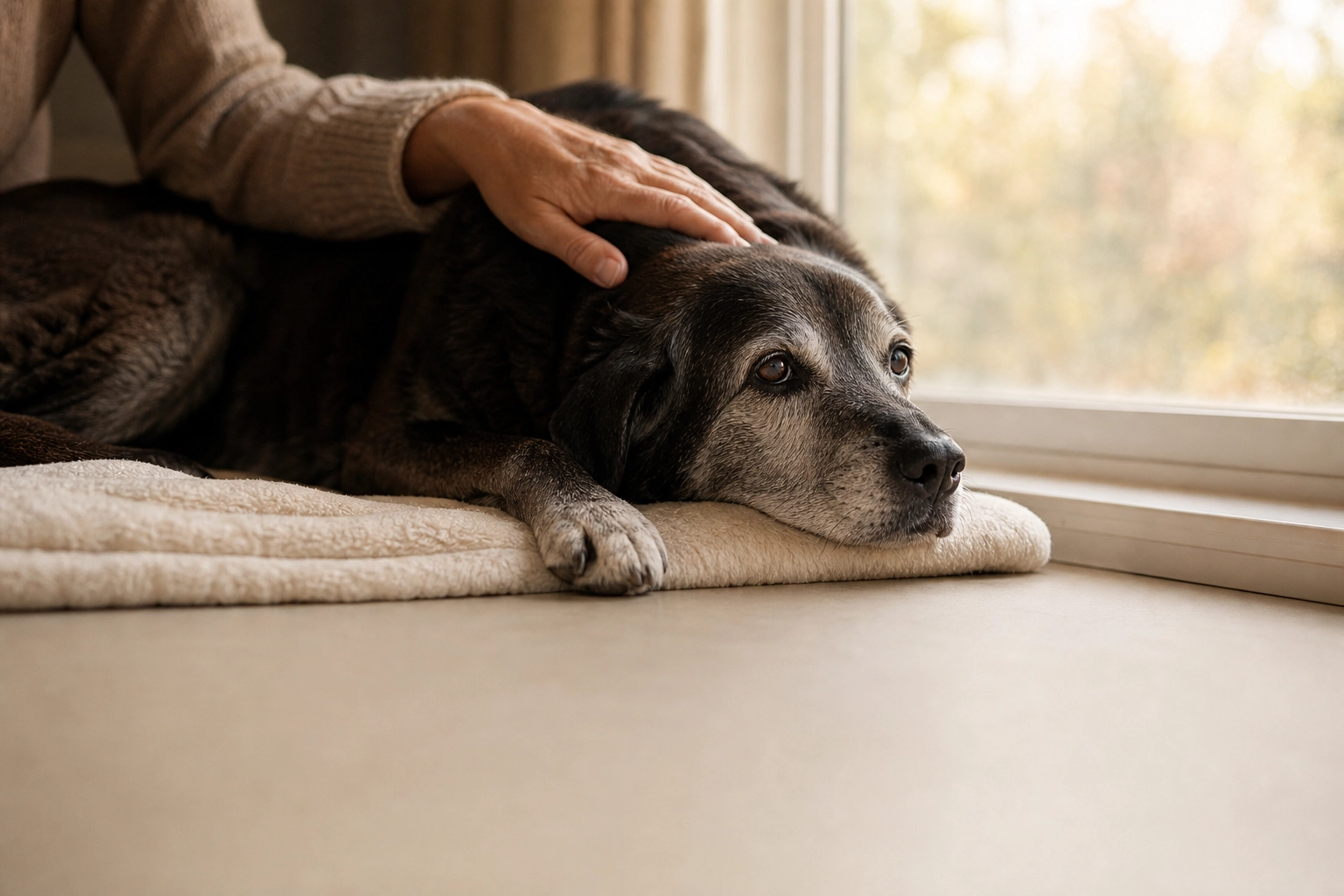
Everything about caring for a senior dog in one place — from knowing when your dog becomes senior, the signs to watch for, common chronic diseases, nutrition, exercise, and health checks, to adapting your home for the best quality of life in their final years.
When your beloved dog starts walking more slowly, sleeping longer, or developing ongoing health conditions, these are signs that he is stepping into his "senior years." The good news is that keeping a senior dog happy and by your side for a long time is absolutely achievable — and it doesn't always mean spending a fortune. The heart of it is planning with understanding: from knowing when your dog becomes senior, to nutrition, exercise, health screening, and making your home safe. As a veterinarian, I've gathered everything an owner should know in one place.
The short answer is it depends on body size and breed — the bigger the dog, the sooner they age. In general, small breeds are considered senior at around 7–10 years, while large and giant breeds reach their senior years earlier, at around 5–6 years, based on how the AAHA Canine Life Stage Guidelines divides life stages.
| Breed size | Approx. weight | Considered senior at |
|---|---|---|
| Small | Under 10 kg | ~8–10 years |
| Medium | 10–25 kg | ~7 years |
| Large | 25–40 kg | ~6 years |
| Giant | Over 40 kg | ~5 years |
Want to know your dog's real "human age"? Don't rely on the old "times 7" rule — it's no longer accurate. Read the correct method in Ditch the "Times 7" Rule: A More Accurate Way to Estimate Your Dog's Age.
Aging is gradual and easy for owners to miss. Check for these signs — if your dog shows several, it's time to shift care into "senior" mode.
Some signs are a normal part of aging, but others — such as excessive thirst, fast-growing lumps, or confusion — warrant a prompt vet visit, as they may signal a hidden disease.
The five most common chronic conditions in senior dogs are dental disease, osteoarthritis, heart disease, kidney disease, and cancer — which progress gradually and stay with your dog for life, but can be managed for a good quality of life.
The first thing owners must understand is that most chronic diseases don't have steady symptoms. Instead, there are calm periods (looking normal) alternating with flare-ups. So talk with your vet to split the treatment into two parts.
1. Background Therapy: medication or an approach done daily to keep symptoms under control
2. Rescue Therapy: medication or a special approach for when your dog is in sudden pain or decline, plus knowing when to rush to the vet
And don't forget that canine cognitive dysfunction (dementia) is also common but hard to spot. Read how to cope in Understanding and Managing Dementia in Senior Dogs.
The key principle is enough good-quality protein alongside calorie control. A common misconception is cutting protein in every senior dog, when in fact adequate protein helps preserve muscle mass (except when your vet restricts protein for certain stages of kidney disease).
Yes! But switch the format to low-impact and "little and often." Stopping exercise altogether accelerates muscle loss (sarcopenia), making your dog weaken faster.
Suitable activities include slow, controlled walking, swimming, and scent games that exercise the brain. Read the full guides in Low-Impact Exercise to Save the Joints and Exercise Tailored to Breed and Life Stage. For dogs with joint pain or post-surgery, add rehabilitation and at-home massage.
The answer is at least twice a year (up from once a year in adulthood), with routine blood and urine tests. More frequent checks help catch kidney disease, heart disease, or cancer at an early stage before symptoms appear — the stage where treatment works best. Read more in Preventive Medicine in Dogs.
The goal is to reduce slips and falls and make everything easy to reach. Small environmental changes help prevent injury as your dog's joints and balance begin to decline.
For dogs with dementia, a safe home setup matters even more — read more in Managing Dementia in Senior Dogs.
Every senior dog needs different care, and success relies on "teamwork" between the owner and the animal hospital staff.
Use Quality of Life (QoL) surveys to assess happiness, pain, and well-being from home, then share the data with your vet to track. It turns the owner's "feelings" into tangible data.
Senior dogs often take several medications for multiple diseases. Keep a notebook summarizing conditions, current medications, side effects to watch for, and the next check-up date.
A senior dog's body adapts slowly. If you must change medication or adjust nutrition, do it one thing at a time and observe closely, setting simple benchmarks (e.g. counting steps, watching enthusiasm) to see whether the change truly helped.
If your dog needs bloodwork, urine tests, or anesthesia for a dental scaling, talk with your vet to bundle them into one session, reducing stress and the risk of repeated anesthesia. But if the risk outweighs the benefit, choosing not to proceed and managing symptoms instead is also a good option.
What we truly want isn't just for our dog to live longer (lifespan), but to extend the period they stay strong, mobile, and happy (healthspan). Every aspect of care in this article shares the same goal: maximizing "quality years." Read more in Healthspan: 6 Science-Backed Ways, and understand why caring well for your dog benefits you too in Why Owning a Dog Helps You Live Longer.
Caring for a senior dog isn't a fight against aging — it's about standing by them with understanding, planning ahead, and preserving as much happiness as possible in the time that remains. Start with simple things today: watch for the signs, adjust the food and the home, and take your dog for check-ups more often. That alone is the best gift you can give for the final chapter of their life.
1. At what age is a dog considered senior?
It depends on body size and breed — the bigger the dog, the sooner they age. Generally small breeds are senior at around 8–10 years, medium at around 7, large at around 6, and giant breeds at around 5, based on the AAHA Canine Life Stage Guidelines.
2. How often should a senior dog have a health check?
At least twice a year (up from once a year in adulthood), with routine blood and urine tests, because it helps catch kidney disease, heart disease, or cancer at an early stage before symptoms appear — the stage where treatment works best.
3. How is senior dog food different from adult food?
The key is enough good-quality protein (not cutting protein as commonly misunderstood, except when your vet restricts it for certain kidney-disease stages), alongside calorie control to avoid obesity, joint support with omega-3, and adequate water intake.
4. What is rescue therapy and why prepare it in advance?
Because chronic disease in senior dogs often has sudden flare-ups — severe joint pain or breathlessness from heart disease. A rescue plan is medication or management your vet prepares in advance so you can relieve symptoms immediately at home without waiting for an appointment, and know which warning signs need an emergency visit.
5. How does assessing quality of life at home help?
QoL surveys turn the owner's feelings into tangible data by assessing happiness, appetite, pain level, and mobility in the dog's normal home setting — helping the vet judge whether the current plan still fits or needs adjusting.
6. Why keep a detailed medication and condition record?
Senior dogs often have more than one chronic condition at once and take multiple medications. A medication list and allergy history prevents drug interactions — e.g. some anti-inflammatory painkillers can harm the kidneys — and is invaluable in an emergency.


