


 United States (USD)
 Singapore (SGD)
 African Country (USD)
 Australia (AUD)
 Canada (USD)
 Egypt (USD)
 European Country (EUR)
 Hong Kong (HKD)
 India (USD)
 Indonesia (IDR)
 Iran (USD)
 Iraq (USD)
 Japan (JPY)
 Myanmar (USD)
 Oman (USD)
 Qatar (USD)
 Saudi Arabia (USD)
 Switzerland (CHF)
 Taiwan (USD)
 Turkey (USD)
 UAE (USD)
 United Kingdom (GBP)
 International (USD)
 Written by
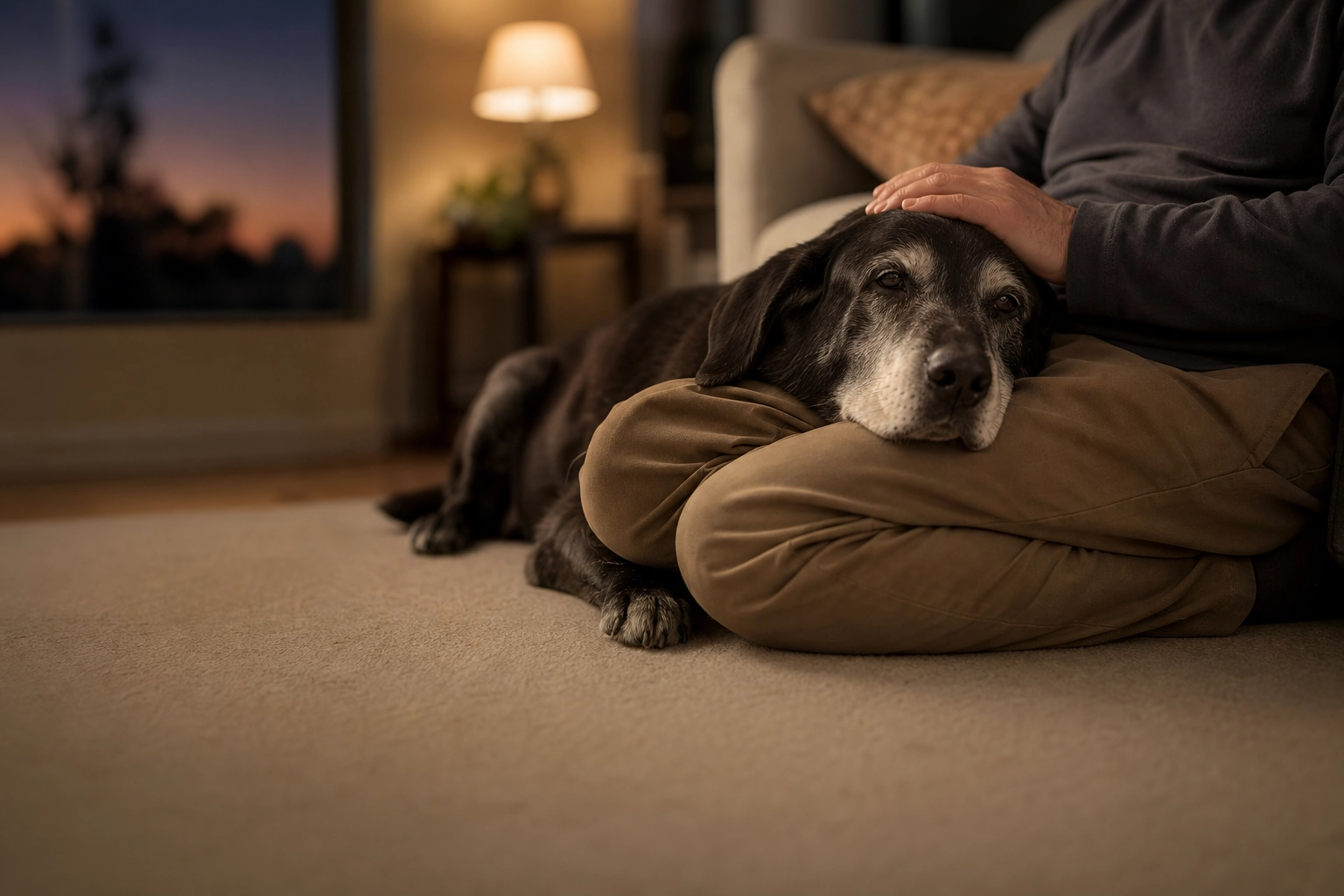
Is your senior dog staring at walls, getting stuck behind the sofa, or pacing at night? These may be signs of dementia. Learn the DISHAA assessment and how to cope with understanding.
Have you noticed your senior dog suddenly standing and staring at a wall, getting stuck behind the sofa unable to back out, or waking up and pacing in the middle of the night? Dogs are living longer these days, but that brings senior health problems — and one of the hardest to spot is "canine cognitive dysfunction" (dementia).
We can't stop aging, but detecting and responding early can slow the progression and add more quality time with us.
If you're unsure whether your dog fits the picture, behavioral medicine experts recommend the DISHAA assessment (developed by veterinary behaviorist Dr. Gary Landsberg). Score each item: 0 = none, 1 = mild, 2 = moderate, 3 = severe (Cornell Riney Canine Health Center).
(Total 4–15 = early stage, 16–33 = moderate, over 33 = severe)
D — Disorientation: getting stuck in corners or behind furniture and unable to back out, not recognizing familiar people, appearing lost in their own home.
I — Interactions: changed behavior toward family — suddenly aloof and unresponsive, or aggressive as if they don't recognize you; a dog who once greeted guests now hides away.
S — Sleep/wake cycles: the sign owners notice first — pacing, whining, barking, or howling at night, then sleeping it off during the day.
H — House soiling: a well house-trained dog suddenly soiling indoors without asking to go out.
A — Activity and Anxiety: abnormally high or low activity — restless pacing at night but unwilling to walk during the day; fearful of new places or people.
Feed and walk at the same times every day (a fixed walking schedule also reduces house soiling). And crucially, never move furniture, beds, or food and water bowls — it only adds confusion and risks them walking into things and getting hurt.
What to avoid: unfamiliar, high-stimulus places (events, markets), which easily panic and stress a disoriented dog; and high-impact activity like ball chasing or stairs. Read more in low-impact exercise.
Caring for a senior dog whose memory is fading takes a little more patience — but believe me, your love and attention to these small details can turn the same old house into the warmest possible haven for their final chapter. If you're starting to suspect it, note down the DISHAA scores and see your vet. And read about managing other chronic conditions in our guide to chronic illness in senior dogs.
1. Which brain supplements are recommended for a dog with dementia?
The main ones are MCTs (an alternative brain fuel when glucose use declines), omega-3 (DHA/EPA) to reduce neural inflammation, and antioxidants (vitamins E and C). Always consult your vet on dosing first.
2. Which activities should a dog with dementia avoid?
Avoid unfamiliar high-stimulus places like events or markets, which easily panic a disoriented dog; high-impact activity like ball chasing or stairs; and moving furniture or food bowls.
3. How do I make the home safe for a disoriented dog?
Use gates to block stairs and narrow gaps, add nightlights so they can see their way, and when approaching a sleeping dog, speak and gently stomp the floor so the vibration warns them in advance.


