


 United States (USD)
 Singapore (SGD)
 African Country (USD)
 Australia (AUD)
 Canada (USD)
 Egypt (USD)
 European Country (EUR)
 Hong Kong (HKD)
 India (USD)
 Indonesia (IDR)
 Iran (USD)
 Iraq (USD)
 Japan (JPY)
 Myanmar (USD)
 Oman (USD)
 Qatar (USD)
 Saudi Arabia (USD)
 Switzerland (CHF)
 Taiwan (USD)
 Turkey (USD)
 UAE (USD)
 United Kingdom (GBP)
 International (USD)
 Written by
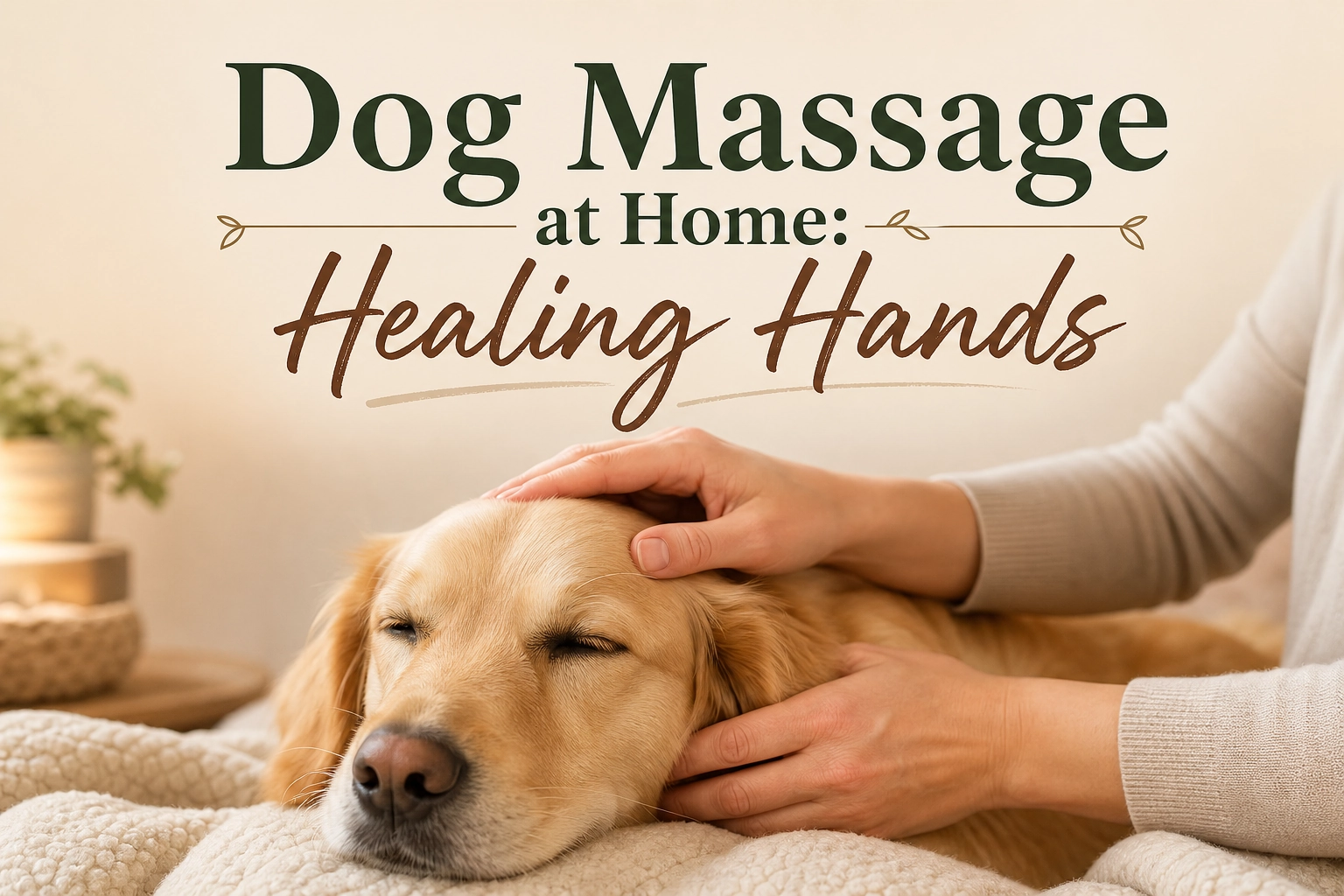
The power of touch is greater than we think. Open a little home spa with therapeutic dog massage to reduce stress, ease pain, and strengthen your bond — with 3 basic techniques and the cautions you can't overlook.
Have you noticed how, when you stroke your dog's head or rub their belly, they close their eyes blissfully, wag gently, or flop down completely relaxed? The power of touch is greater than we think — and applied correctly, it becomes "therapeutic dog massage" that eases pain, boosts circulation, and helps your dog's body recover. Today I'll help you open a little home spa, based on the AKC, pet rehab centers, and the journal Vet Record.
Pet rehabilitation experts and the AKC note that regular, proper massage offers benefits on many levels (American Kennel Club):
Before you start, set up a quiet spot, let your dog lie on a soft cushion in a comfortable position, and use a soft, soothing voice. Then begin with these 3 standard techniques.
Use both palms to stroke gently in a steady rhythm, starting at the head, over the back, down to the tail tip and along the legs. This warms up the muscles and gets your dog used to the touch.
Use your thumb and index fingertip (or your palm for large dogs) to knead slowly in small circles over dense muscle areas like the neck, shoulders, upper back, and hips, helping break up trigger points. Caution: never press directly on bone, spine, or joints.
Gently support one leg, extend it straight slowly, and fold it back in a soft range along the natural joint line. This improves flexibility and maintains range of motion. If your dog resists or cries out, stop immediately.
Massage and physiotherapy are especially important for specific groups (State Ave Veterinary — Rehabilitation Q&A):
Research in the journal Vet Record (BVA Journals) highlights two key points: the barriers of cost and time from frequent hospital visits lead modern vets to support home-based rehabilitation — teaching owners to massage and train their dogs at home, which is cost-effective and works well because the dog isn't stressed. It stresses that over 50% of success happens "at home" through client compliance (Vet Record, BVA Journals). Read the overview of rehab science in our canine rehabilitation guide.
Massage is safe and beneficial, but there are contraindications you must memorize. If your dog has any of these, do not massage:
High fever / acute infection: massage boosts circulation and can spread the infection faster.
Open wounds / severe skin inflammation: causes pain and risks introducing dirt into the wound.
Fractures / acute tendon tears: massaging or pulling the leg may worsen tissue damage.
Cancer: massage or certain tools near a tumor may stimulate the spread of cancer cells.
Your two hands are the best therapy tool for your dog. Try gentle stroking while watching their body language — if they move away, growl, or tense up, that spot may hurt, so ease off. And if your dog has a chronic condition, consult your vet to design the safest individualized routine before starting at home.
1. What are the basic dog massage techniques?
There are 3 main techniques: Effleurage (gentle warm-up strokes), Petrissage (small circular kneading to release muscle knots), and Passive Stretching (gentle leg stretching).
2. Can massage really reduce a dog's stress?
Yes. Massage lowers the stress hormone cortisol and stimulates oxytocin, helping dogs that fear noises or feel anxious to calm down.
3. Which dogs should not be massaged?
Never massage a dog with a high fever, open wounds, an unset fracture, a skin infection, or cancer, as it may spread infection or cancer cells.


