


 United States (USD)
 Singapore (SGD)
 African Country (USD)
 Australia (AUD)
 Canada (USD)
 Egypt (USD)
 European Country (EUR)
 Hong Kong (HKD)
 India (USD)
 Indonesia (IDR)
 Iran (USD)
 Iraq (USD)
 Japan (JPY)
 Myanmar (USD)
 Oman (USD)
 Qatar (USD)
 Saudi Arabia (USD)
 Switzerland (CHF)
 Taiwan (USD)
 Turkey (USD)
 UAE (USD)
 United Kingdom (GBP)
 International (USD)
 Written by
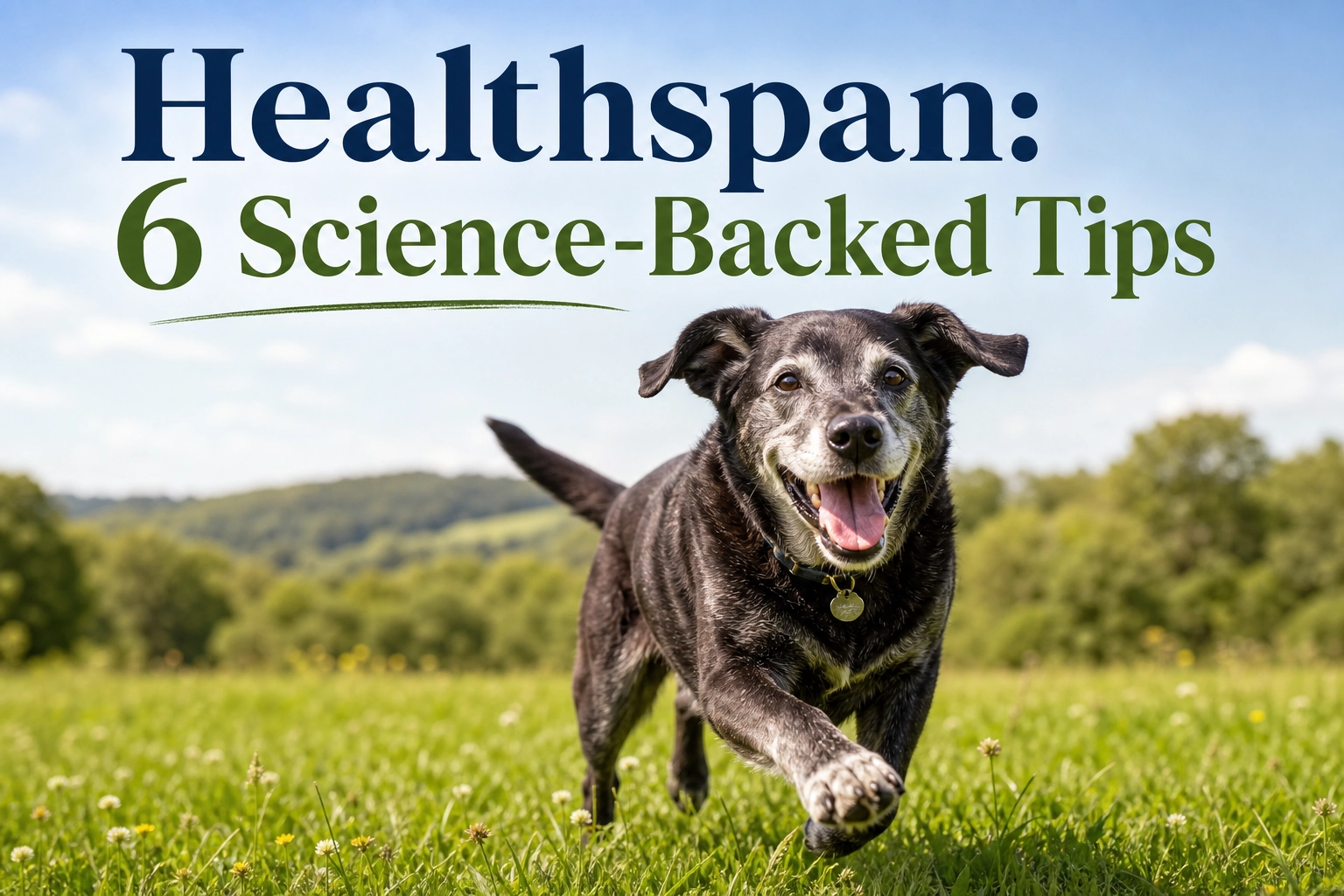
The goal isn't making your dog live longest — it's extending "healthspan," the years they stay active and disease-free. Here are 6 tips from Dog Aging Project researchers, plus 3 overlooked factors, you can start today.
What if walking your dog every day could extend their life? What if playing games with them, brushing their teeth, or taking them to the park could give them a few more years? These are the questions scientists at the Dog Aging Project are racing to answer — and while we wait for longevity drugs, they've uncovered simple things we can do right now.
Scientifically, aging isn't fixed and predetermined — it's a "modifiable" process. Lifestyle behaviors like nutrition, physical activity, and environment play a substantial role in shaping your dog's healthspan (Oh et al., Journal of Veterinary Science, 2025).
The body of evidence shows physical activity is linked to better cognitive health and fewer owner-reported diagnoses, because it lowers obesity — which is linked to diabetes, osteoarthritis, and impaired respiratory function. Importantly, structured physical activity (adjusted for breed and health status) also helps preserve lean muscle mass and delay age-related muscle loss (sarcopenia). Conversely, sedentary behavior accelerates decline, causing joint stiffness and reduced cardiovascular fitness
The recommendation is at least 30 minutes a day, though the amount depends on breed and disposition. The key is consistency — "weekend warrior" dogs that are largely sedentary then do intense bursts on weekends face injuries and health issues. Read more in our exercise guide by breed and life stage.
Researchers found that social connectedness has a profound impact on a dog's well-being. Dogs with more human and animal friends had fewer owner-reported diagnoses, and environmental enrichment — cognitive stimulation, social interaction, and stress reduction — all support cognitive function in aging pets. Dogs are a social species, just like people. Playing games, going on excursions, and letting them socialize may help postpone cognitive decline later in life.
Studies consistently show spayed and neutered dogs live longer. In females, spaying dramatically reduces mammary cancer risk and eliminates uterine and ovarian cancer risk. In males, neutering prevents testicular cancer and lowers prostate disease risk. Neutered dogs also tend to be less aggressive and less likely to roam, reducing the odds of car accidents and fights. The right timing varies by breed — consult your vet.
Raw foods may carry pathogens like salmonella. Home-cooked meals often fail to meet protein, fat, and micronutrient needs. And fatty table scraps can cause life-threatening pancreatitis.
But the biggest issue vets see is overfeeding. Obesity is linked to a lifespan about 2.5 years shorter, and it becomes a vicious cycle — obese dogs lose the ability to exercise, and with it all those health benefits. Maintaining optimal body condition through appropriate nutrition reduces the risk of osteoarthritis, diabetes, and heart disease. The simple advice: choose a food carrying an AAFCO nutritional adequacy statement. Read more in dog weight management.
Routine exams catch disease earlier and improve outcomes. Research found dogs regularly evaluated by a vet were about 30% less likely to develop chronic disease, and vaccinated dogs had roughly 40% fewer transmissible disease cases. After the puppy visits, dogs should see a vet once a year — and twice a year in their senior years. See details in preventive medicine.
This is the most overlooked one, yet dental care is linked to a reduced mortality rate in dogs. Dental disease triggers body-wide inflammation, causes life-threatening infections, and worsens existing conditions like heart disease — like putting gasoline on a fire that's already burning. Daily brushing is ideal, but even a few quick swipes several times a week helps.
The latest scientific review highlights three more lifestyle factors that are often neglected in senior dog care (Oh et al., Journal of Veterinary Science, 2025).
Sleep quality is directly linked to brain health. Senior dogs with a disrupted sleep/wake cycle (waking and pacing at night) often show an early sign of dementia. A calm sleeping area and a steady routine matter. Read more in dementia in senior dogs.
Exposure to pollutants and accumulated chemicals contributes to bodily decline, especially in senior dogs whose detoxification capacity is reduced. Being mindful of your dog's surroundings (cigarette smoke, pesticides, cleaning agents) helps ease the burden on their body.
Often forgotten is the mental health of the owner. Caring for a chronically ill dog with complex treatment regimens creates stress and burden, which ultimately affects the consistency of care and the dog's health. Seeking support and planning together with your vet matters for both human and dog.
The goal isn't to make your dog live forever — it's to maximize their "healthspan": the years they can still run, eat well, and live pain-free. As one veterinarian put it, an animal can live to 20, but if the last three years are miserable, that's not what we're aiming for. The most important thing is for them to live as long and as healthy as possible — and all of these can start today.
1. How is healthspan different from lifespan?
Healthspan is the portion of life a dog stays active and disease-free, unlike lifespan which is just years lived. The goal is to extend quality years, not simply survive longer.
2. Is intense weekend exercise good enough?
Consistency matters more. 'Weekend warrior' dogs — sedentary all week then overexerted on weekends — face more injuries. Aim for consistent activity, at least 30 minutes a day, to preserve muscle mass and delay sarcopenia.
3. Does brushing teeth really matter?
Very. Dental care is linked to reduced mortality, because dental disease triggers body-wide inflammation and worsens existing conditions like heart disease.


