


 United States (USD)
 Singapore (SGD)
 African Country (USD)
 Australia (AUD)
 Canada (USD)
 Egypt (USD)
 European Country (EUR)
 Hong Kong (HKD)
 India (USD)
 Indonesia (IDR)
 Iran (USD)
 Iraq (USD)
 Japan (JPY)
 Myanmar (USD)
 Oman (USD)
 Qatar (USD)
 Saudi Arabia (USD)
 Switzerland (CHF)
 Taiwan (USD)
 Turkey (USD)
 UAE (USD)
 United Kingdom (GBP)
 International (USD)
 Written by
"Hip dysplasia" and "hip osteoarthritis" affect the same joint and look similar, but differ in cause and life stage. Learn to tell them apart for proper care, plus how to prevent early hip damage.
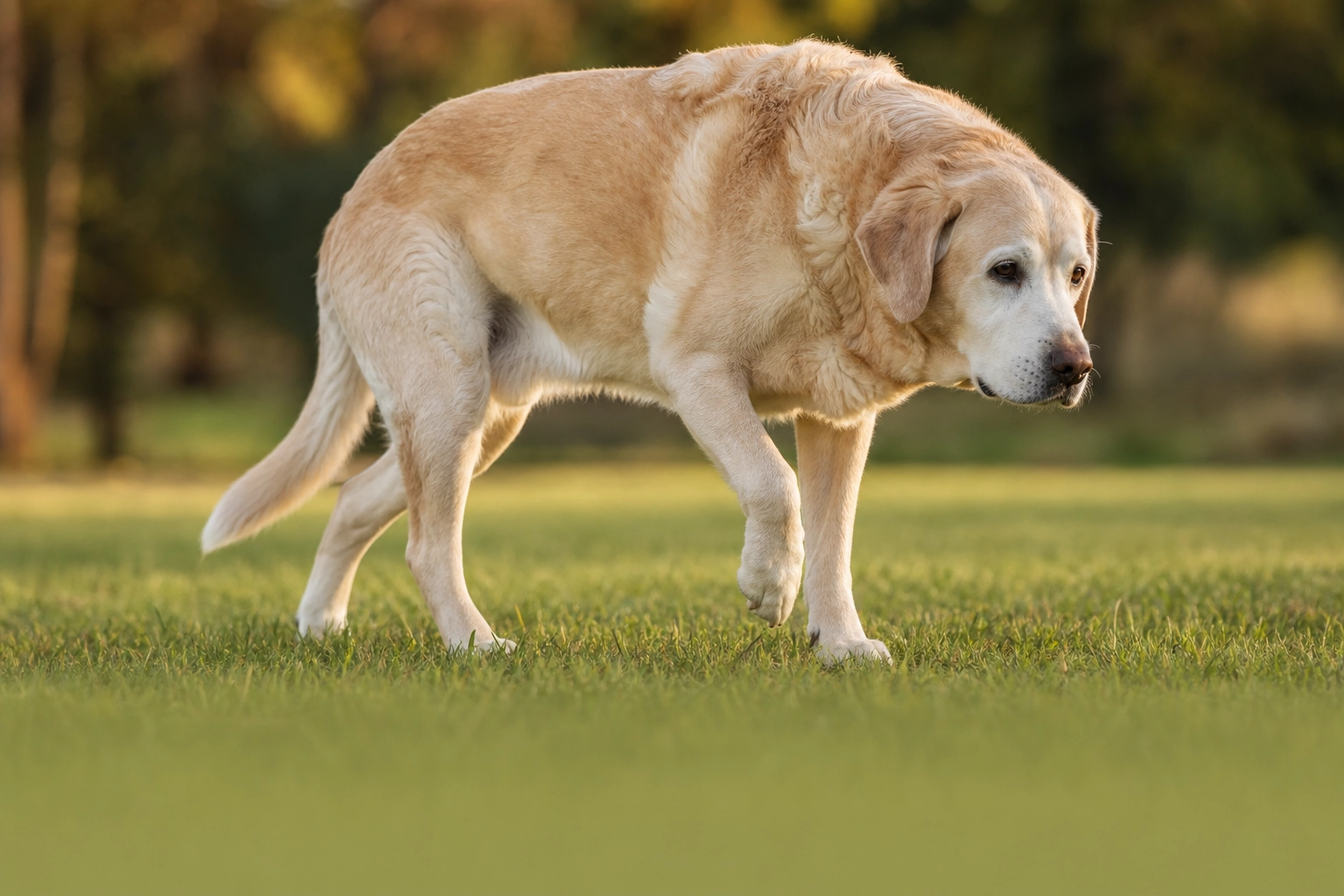
If you have a large breed like a German Shepherd or Labrador Retriever, you've probably heard of both "hip dysplasia" and "hip osteoarthritis." But did you know that although both affect the hip and both cause limping, medically they relate to each other as cause and effect — a distinction we must understand to care for our dogs properly? Today I'll break down the comparison clearly.
This is a "genetic and structural abnormality" usually seen in large breeds from adolescence or a young age. The femoral head and the acetabulum (hip socket) don't grow in proportion, leaving the joint loose (laxity) — not fitting together snugly like a jigsaw piece.
The impact: with a loose hip, every step and run drives the femoral head to grind and impact abnormally against the socket.
This is a "degenerative disease of age and use" (most often in senior dogs). The core mechanisms are articular cartilage degeneration, subchondral bone sclerosis, and synovial inflammation.
The impact: the cartilage that once acted as a "shock absorber" disappears, so bone grinds directly on bone, causing chronic pain and eventually muscle atrophy.
The cause-and-effect relationship: hip dysplasia is the "cause" that makes the joint loose and abnormally grinding — and that prolonged grinding is what accelerates hip osteoarthritis, the "end result."
But in some older dogs that never had dysplasia as puppies, age plus body weight alone can also cause OA (Anderson et al., Frontiers in Veterinary Science, 2020).
Regardless of the cause, dogs show strikingly similar clinical signs — and the problem is that the early subtle signs are often missed until the disease is well advanced (Clark & Comerford, Journal of Small Animal Practice, 2023).
Excess weight is the biggest enemy, directly increasing the load on the hips. Read more in dog weight management.
Focus on low-impact but consistent activity — swimming or walking on soft ground rather than running and jumping on concrete. What to avoid: throwing a frisbee or ball for high-speed fetch with sudden braking, jumping in and out of cars or off sofas, and running on concrete. Read more in low-impact exercise.
Lay non-slip mats along main walkways (to stop hind legs splaying and sliding), install ramps or dog steps for cars and high surfaces, and switch to orthopedic memory-foam bedding to distribute weight and reduce morning stiffness.
If your dog already has symptoms, rehabilitation helps a great deal. Read more in our canine rehabilitation guide.
Understanding the difference and spotting the signs early enables timely treatment (early intervention) — turning joint pain and suffering into the most comfortable, happy final chapter possible for your big four-legged friend. If you notice limping or difficulty rising, don't wait: have a vet assess their joint structure promptly.
1. How do hip dysplasia and hip osteoarthritis differ?
The key difference is cause and age. Hip dysplasia is structural looseness from puppyhood due to genetics; hip OA is age-related degeneration from cartilage breakdown, usually in older dogs. Dysplasia is the 'cause' that accelerates OA, the 'end result'.
2. Which activities should I avoid to protect the hips?
Avoid high-impact activity: frisbee or ball fetch with sudden braking, jumping in and out of cars or off sofas, and running on concrete. Switch to swimming or walking on soft ground instead.
3. How should I adapt my home to protect my dog's hips?
Lay non-slip mats along main walkways, add ramps or dog steps for cars and sofas to break the jumping cycle, and switch to orthopedic memory-foam bedding for joint health.


