


 Thailand (THB)
 United States (USD)
 Singapore (SGD)
 African Country (USD)
 Australia (AUD)
 Egypt (USD)
 European Country (EUR)
 Hong Kong (HKD)
 India (USD)
 Indonesia (IDR)
 Iran (USD)
 Iraq (USD)
 Japan (JPY)
 Myanmar (USD)
 Oman (USD)
 Qatar (USD)
 Saudi Arabia (USD)
 Switzerland (CHF)
 Taiwan (USD)
 Turkey (USD)
 UAE (USD)
 United Kingdom (GBP)
 International (USD)
 Written by
Physical exercise alone isn't enough. Discover 5 types of Mental Enrichment for dogs — food, scent, toys, environment, and training — to work your dog's brain, ease stress, and keep them happy.
Ever wondered why you walk your dog until their legs are tired, yet they come home still bursting with energy, restless, or even wrecking the house? I can tell you it's because dogs are social, intelligent, and highly active animals. Physical exercise alone may not be enough — they need to work their brains and sharpen their minds at every stage of life. In this article, I'll walk you through how to give your dog "Mental Enrichment."
The word Enrichment means adding stimuli and encouraging natural behaviours — in other words, activities that let your dog safely and appropriately use their instincts, brain, and senses. Today I've gathered 5 types of enrichment ideas you can mix and match so your dog never gets bored.
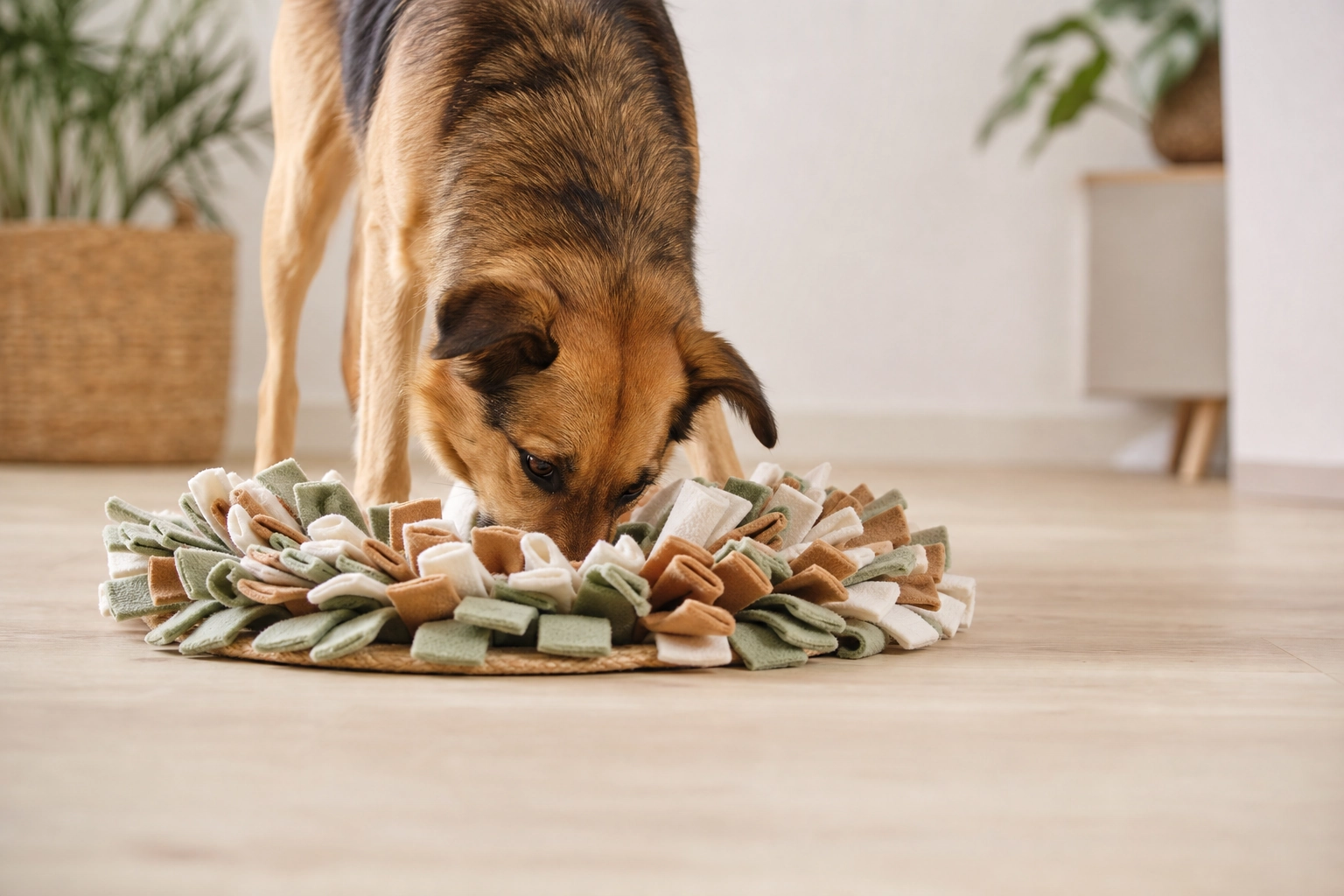
Meals and treats are the best part of a dog's day. Instead of putting food in a bowl that's gone in 2 minutes, try switching to a food-hiding game they love. This approach clearly stimulates foraging behaviour and boosts activity levels, because it's a game centred on each dog's focus and self-reliance.
Smell is the most important sense for a dog. Sniffing is a natural behaviour and their main way of gathering information about their surroundings. Researchers have found that olfactory enrichment clearly reduces over-aroused behaviours such as jumping and vocalizing, while encouraging dogs to show natural exploratory behaviours instead. If your dog is hyper, jumps on guests, or barks a lot, try using scent games to draw their focus.
Playing games with toys develops the body and mind, builds confidence, and strengthens the bond between you and your pet. Here are some tips for fun play:
Taking your dog somewhere new isn't just fun — animal behaviour science has found that outdoor activities help dogs display relaxed behaviour and clearly reduce panic and stress-related behaviours. They come home, sleep soundly, feel good, and won't be tearing up the house. Outdoor activities should go hand in hand with exercise suited to your dog's age and breed for good physical health at the same time.
Even on the same old route, you can add fun with these activities:
Examples of tricks you can teach include: High Five (one paw at a time), Figure of Eight, tidying toys away, placing both front paws on an object, and running through a tunnel. Beyond new skills, this training builds confidence and strengthens the bond between you and your four-legged friend in ways you can truly feel.
Mental Enrichment matters not only for lively young dogs. Regular brain stimulation is also long-term brain-health care that can help delay problems seen in senior dogs. Read more in Dementia in Senior Dogs.
1. Why does my dog still have so much energy and want to wreck things after I've walked them to exhaustion?
Because dogs are intelligent animals with strong instincts, physical exercise alone isn't enough. They also need Mental Enrichment, or brain training, alongside it. When the brain isn't used, dogs get bored and release that energy through unwanted behaviours such as loud barking or destroying furniture.
2. What kinds of activities can sharpen my dog's mind and stimulate their senses every day?
You can mix and match many types. For food, use a Lick Mat or Puzzle Feeder and scatter kibble on the lawn. For scent, let your dog sniff freely on walks or play toy hide-and-seek. For the outdoors, take them to walk on new surfaces or splash in an inflatable pool to open up new experiences and ease stress.
3. What techniques make playing with toys and training safer while strengthening our bond?
Rotate toys every week so your dog doesn't get bored, let them win the game sometimes to build confidence, and stop the game immediately if their teeth touch your hand to teach a safety rule. Reward-based training, such as a paw shake or figure of eight, exercises the brain and strengthens the bond between you and your dog.
4. Can brain training really tire a dog out like physical exercise?
Yes, it truly can. Mental and focus training tires and satisfies a dog as much as physical exercise because it takes energy to think, solve problems, and concentrate. So on days you can't get outside, indoor brain activities still help your dog relax and sleep better.


