


 Thailand (THB)
 United States (USD)
 Singapore (SGD)
 African Country (USD)
 Australia (AUD)
 Canada (USD)
 Egypt (USD)
 European Country (EUR)
 Hong Kong (HKD)
 India (USD)
 Indonesia (IDR)
 Iran (USD)
 Iraq (USD)
 Japan (JPY)
 Myanmar (USD)
 Oman (USD)
 Qatar (USD)
 Saudi Arabia (USD)
 Switzerland (CHF)
 Taiwan (USD)
 Turkey (USD)
 UAE (USD)
 United Kingdom (GBP)
 Written by
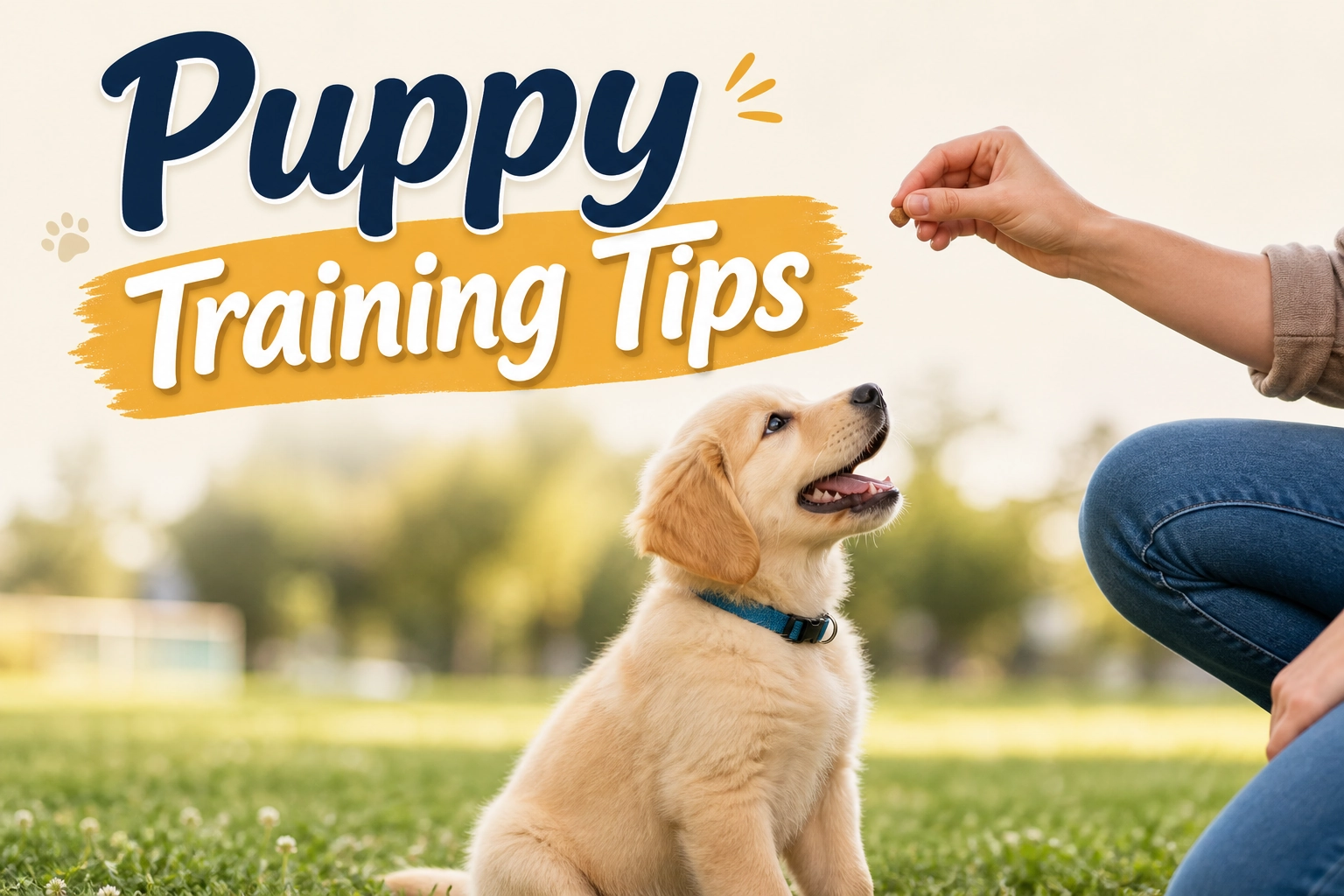
Brought home a puppy and the early days feel overwhelming? Believe me, you can do this! Here are effective puppy training principles — from well-timed rewards and dog-proofing to socialization and mental exercise.
Whether you've just brought home an 8-week-old puppy or welcomed an adult dog, the early days can feel overwhelming. But believe me — "you can do this!" Today I've gathered the basic principles that will make training smoother and more fun.
Puppies have physical and mental limits. Don't expect them to follow the rules perfectly from day one — think of them like a baby who needs time to learn. And understand that dogs aren't born understanding human language. The word "no" means nothing to a puppy who just arrived. Instead of hoping they'll stop on their own, "show them" what you want them to do instead — for example, rather than scolding for jumping, ask them to sit.
The easiest way to prevent bad habits is "not giving the opportunity." Use a pen, crate, or gate to create a safe space when you can't directly supervise, and provide suitable chew toys to save your furniture. Remember that the behaviors your dog does are the ones we "reinforce" — for example, if you leave food on the table and they steal it, they instantly learn "climbing the table = food." Be careful what you accidentally teach them.
If you give the treat even a few seconds late, your dog won't know what it was for. Praise or treats must come immediately when they succeed.
For hard behaviors or distracting places, try small soft pieces of boiled chicken, cheese, or liver that they can chew and swallow right away so training doesn't stall.
We tend to be quick to scold mistakes, but rewarding when they do right or stay calm is the key to teaching them which behaviors you like. This reward-based approach is backed by research showing it's effective and better for welfare than punishment (China et al., Frontiers in Veterinary Science, 2020).
Puppyhood is the golden window for socialization. Gradually and positively exposing your puppy to varied people, animals, sounds, and environments helps them grow into a confident dog with fewer behavior problems as an adult (Howell et al., Veterinary Medicine, 2015). And remember, "a bored dog is a destroyer" — scent games or puzzle toys (mental stimulation) can tire them out and calm them as much as running, while being safe for a growing body.
If you start getting frustrated, your dog senses it instantly. When that happens, take a break, breathe deeply, and come back when you're both in a good mood. And never punish your dog when they come to you, no matter what mischief they got up to before — so they learn that "coming to you is the best thing ever."
Training a puppy isn't a competition — it's learning together with love and patience. Every small, consistent step becomes the foundation of good lifelong habits. If you've adopted an older dog, read more in our rescue dog training guide, and for proactive health care, see preventive medicine.
1. How should I start training a new puppy at home?
Dog-proof the environment with a pen or crate when unsupervised, adjust your expectations that they're a child, and use the 'show them' method — e.g. ask for a sit instead of scolding for jumping.
2. How do I use treats for the fastest results?
Praise or treat immediately (timing) within a few seconds of the correct behavior, and use High-Value treats like boiled chicken, cheese, or liver for distracting environments.
3. Why is socialization so important during puppyhood?
Very important. Puppyhood is the golden window for socialization — gradual, positive exposure to people, animals, sounds, and environments reduces behavior problems in adulthood.


