


 United States (USD)
 Singapore (SGD)
 African Country (USD)
 Australia (AUD)
 Canada (USD)
 Egypt (USD)
 European Country (EUR)
 Hong Kong (HKD)
 India (USD)
 Indonesia (IDR)
 Iran (USD)
 Iraq (USD)
 Japan (JPY)
 Myanmar (USD)
 Oman (USD)
 Qatar (USD)
 Saudi Arabia (USD)
 Switzerland (CHF)
 Taiwan (USD)
 Turkey (USD)
 UAE (USD)
 United Kingdom (GBP)
 International (USD)
 Written by
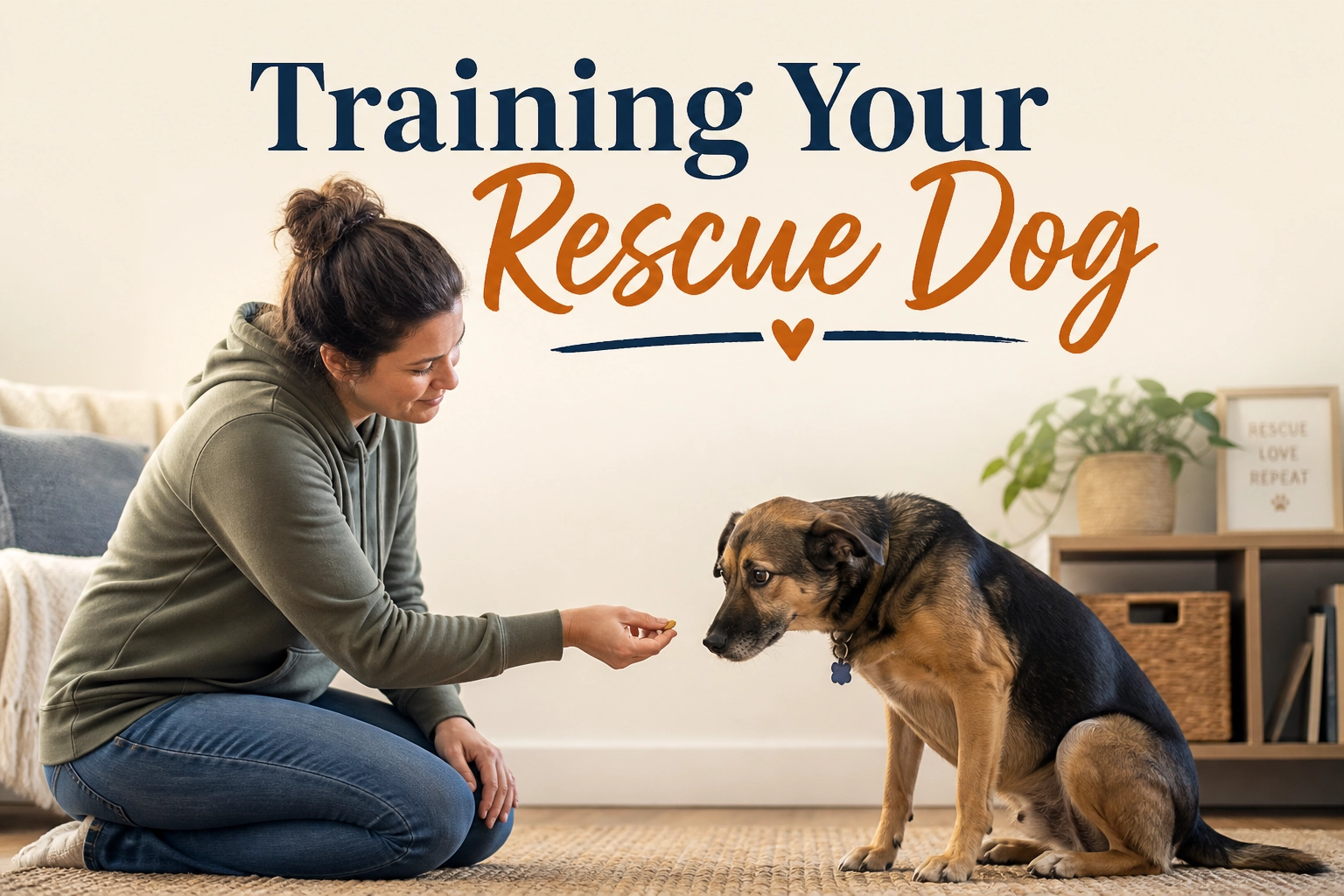
Adopting a shelter dog is a touching experience, but each dog has a different background. Training is about building confidence and safety through positive reinforcement and patience.
Adopting a dog from a shelter is a touching experience. But an important thing to realize is that these dogs come with different "backgrounds" — some may have experienced abandonment or fear. So training isn't just about giving commands; it's about building "confidence and safety" in their new home. Today I'll share a compassionate approach to training.
The heart of training a rescue dog is positive reinforcement — rewarding your dog when they do the right thing (treats, praise, or play) to increase the chance they repeat that good behavior — and never punishment. The goal is force-free training so a dog with past trauma can relax and trust you more. Research confirms reward-based training is at least as effective as aversive methods, but far better for welfare and the bond (China et al., Frontiers in Veterinary Science, 2020), while punishment-based methods are linked to greater stress and fear (Vieira de Castro et al., PLoS ONE, 2020).
During the early adjustment period, focus on 5 basic cues in sessions of 10–15 minutes (3–5 minutes for puppies), 2–3 times a day: Sit, Down, Stay, Heel, and Come. Keep a consistent routine for meals, play, and walks — because dogs feel safe when they can predict what happens next.
Limit their space at first — don't let them roam the whole house until they're reliably toilet-trained. Take them out at least 3–4 times a day and reward immediately when they go in the right place.
Make the crate a happy place with treats or toys inside. Start by closing the door and opening it right away, then gradually extend to 30 seconds to 1 minute, keeping everything calm and low-key when you let them out.
Use a harness, which is safer and easier to control than a collar. Practice indoors without distractions first, rewarding every time your dog looks up at you. If they start pulling, stop walking and wait until they refocus on you before continuing.
Rescue dogs may fear new things like bicycles, strangers, or doorbells. The tip is to pair the scary thing with a reward immediately so they learn "that thing means treats." Use a short marker word like "yes" or "good" before the reward to clearly signal what they did right.
Four common ones: rushing (introducing them to children or other pets on day one), giving freedom too soon before training, ignoring problem behaviors out of "pity" for their past until they become hard to fix, and expecting perfection. Remember your dog needs adjustment time.
Training a rescue dog is building trust one step at a time. With patience and love, a dog with a difficult past can absolutely become a confident, happy companion. Want to nail the training basics first? Read more in puppy training tips, and if you'd like to understand your dog's temperament more deeply, feel free to consult the Geneus Pet team.
1. How do I start building trust with a rescue dog?
The core is positive reinforcement (treats, praise, play) when they do right, and no punishment, to build safety and trust — along with a consistent daily routine.
2. How should I house-train an adopted adult dog?
Limit their space at first, take them out on a schedule 3–4 times a day, and reward immediately when they go in the right spot. Don't give freedom until they're reliable.
3. What equipment should I use for leash training?
Use a harness, which is safer and easier to control than a collar. Practice indoors without distractions and stop every time your dog pulls.


