


 By
By
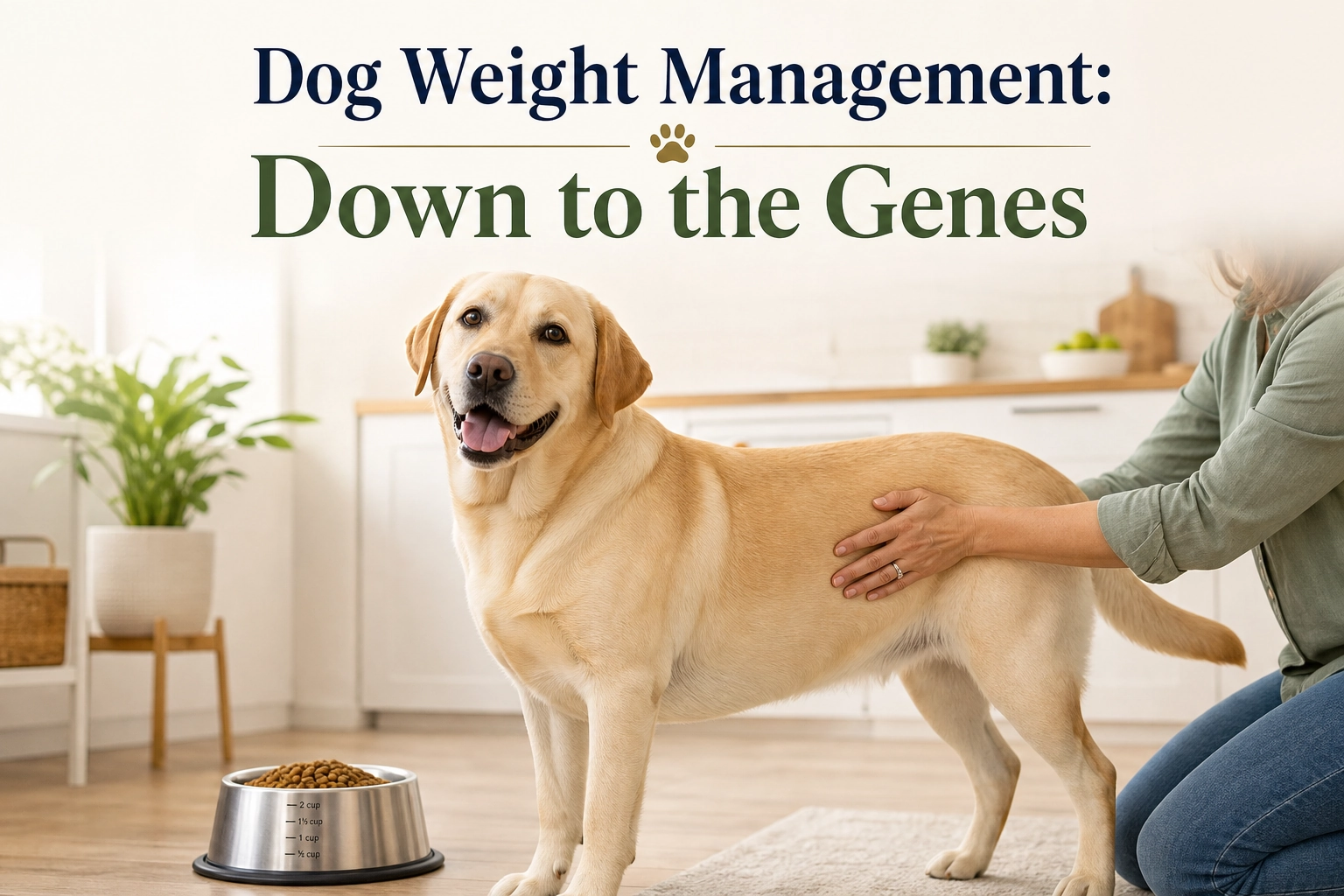
Canine obesity is a chronic disease that shortens lifespan, and part of that hunger comes from the POMC and DENND1B genes that impair the brain's satiety switch. The good news: owner discipline beats the obesity genes!
When we see a round, short-legged dog waddling along, we tend to find it adorable — and when they give us those pleading eyes for a treat, our love often comes out as "pouring more food." But in modern medicine, canine obesity is classed as a "chronic disease" that seriously shortens lifespan. Recently, science even found that the obesity mechanism in Labradors helps solve the puzzle of human obesity too. This article digs from the genetic level all the way to proper weight management.
Many owners feel guilty — "Am I feeding badly? Why does my dog keep gaining weight even eating the same as others?" The truth is many dogs are born with an "impaired satiety control system."
Researchers at the University of Cambridge found that Labradors and Flat-Coated Retrievers often carry a mutation in the POMC gene, which controls satiety signaling in the brain (leptin-melanocortin signaling) — making them feel constantly hungry, food-obsessed, and with a lower baseline metabolism (GOdogs, University of Cambridge).
A study published in Science ran a genome-wide association study (GWAS) in 241 adult Labradors and found dogs carrying one mutant allele of the DENND1B gene had about 7–8% more body fat — and the gene is also linked to body mass index (BMI) in humans from the UK Biobank. The mechanism: it makes the brain's MC4R satiety receptor internalize too quickly, so the brain never gets the "full" signal (Wallis et al., Science, 2025).
Data from the Cornell Riney Canine Health Center shows dogs overweight throughout life have their lifespan shortened by an average of 2.5 years and face complications (Cornell Riney Canine Health Center): osteoarthritis (fat compresses the joint surfaces daily), respiratory disease and heatstroke risk (fat crowds the airway), and diabetes/cancer (from chronic low-grade inflammation).
Don't judge by the scale alone, since builds differ. Look and feel using the BCS system (score 1–9, where 4–5 is ideal) (Association for Pet Obesity Prevention):
From above: you should see a clear "waist" like an hourglass. Straight and cylindrical = overweight.
From the side: the belly should tuck up, not hang parallel to the floor.
Feel the ribs: a light stroke should find the ribs under a thin fat layer = good shape. Only thick fat = overweight.
The most striking finding from Science is proof that even with high polygenic risk, if the owner strictly controls diet and exercise, that dog will not become obese. The obesity genes only act up when owners over-indulge them (Wallis et al., Science, 2025). Here are the 4 pillars of weight management:
Don't just halve the current food (it causes nutrient deficiency). Switch to a weight-loss formula that's low in calories and fat but higher in fiber and quality protein, to keep them full longer and preserve muscle.
Total daily treat calories must not exceed 10% of required energy. Swap processed treats for low-calorie fruits and veggies like diced boiled carrot or apple (no seeds).
Overweight dogs already have stressed joints. Do slow, steady leashed walks twice a day, 15–20 minutes each, or swimming/underwater treadmill (hydrotherapy), which cuts joint load by 60–70%. Read more in low-impact exercise.
The safe rate is 1–2% of starting weight per week (e.g. a 30 kg dog loses 0.3–0.6 kg/week). Be patient and disciplined.
True love isn't indulging with food every time your dog gives you those eyes — their brain is already genetically locked to feel constantly hungry. Our job is to protect their health. Giving them a lighter body and pain-free joints is the most precious gift. If you'd like an individualized weight-loss plan, consult your vet or the Geneus Pet team.
1. Why do some dogs gain weight easily even eating the same as others?
Partly true. Research shows Labradors often carry POMC and DENND1B mutations that stop the brain from getting the 'full' signal, so they're constantly hungry — but owner discipline can overcome the genes.
2. How much weight per week is safe for a dog to lose?
The safe rate is 1–2% of starting weight per week, e.g. a 30 kg dog should lose 0.3–0.6 kg/week. Losing too fast risks muscle mass and the liver.
3. If my dog has obesity genes, does that mean it's hopeless?
Yes. The Science study proved that even with high genetic risk, if the owner strictly controls diet and exercise, the dog won't become obese.


