


 United States (USD)
 Singapore (SGD)
 African Country (USD)
 Australia (AUD)
 Canada (USD)
 Egypt (USD)
 European Country (EUR)
 Hong Kong (HKD)
 India (USD)
 Indonesia (IDR)
 Iran (USD)
 Iraq (USD)
 Japan (JPY)
 Myanmar (USD)
 Oman (USD)
 Qatar (USD)
 Saudi Arabia (USD)
 Switzerland (CHF)
 Taiwan (USD)
 Turkey (USD)
 UAE (USD)
 United Kingdom (GBP)
 International (USD)
 Written by
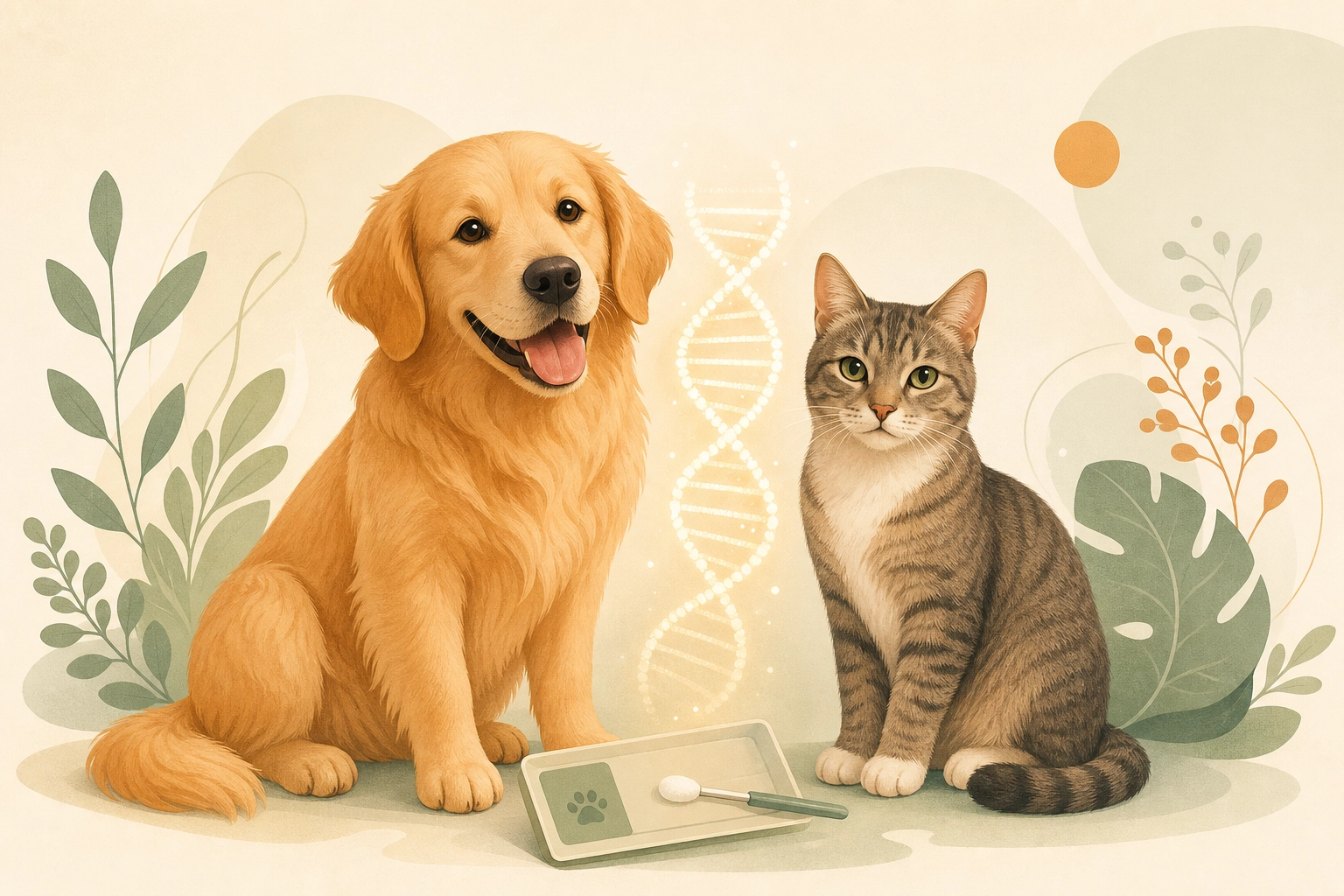
Why are orange cats usually male and calicos usually female? Unravel cat coat color genetics — the X-linked orange gene, X-inactivation, tabby patterns, and white — with a 2025 discovery.
Ever wonder why orange cats are usually "princes" while calicos are usually "princesses"? It's no coincidence — it's beautiful genetics. As a veterinarian, I'd love to unravel the secret of your cat's coat color.
Coat color comes from two main melanin pigments: eumelanin (black/brown) and pheomelanin (orange/yellow). The switch between them is controlled by the MC1R gene and the Agouti protein. But cats have something special unlike other animals — the orange gene on the X chromosome.
The orange gene (the O locus) sits on the X chromosome. Male cats are XY, with only one X — if that X carries the orange allele, the whole cat is orange. Females (XX) need the orange allele on both X chromosomes to be fully orange, which is less common. So orange cats are clearly more often male.
Calicos and tortoiseshells are almost always female because they carry two X chromosomes with different alleles (orange on one, non-orange on the other). In each cell, the body randomly switches off one of the two X chromosomes (X-inactivation), producing patches of orange and black across the body. This very phenomenon was key evidence for Mary Lyon's 1961 theory of X-inactivation.
A 2025 study finally revealed that orange color is caused by a roughly 5-kilobase DNA deletion at the ARHGAP36 gene, which makes it switch on abnormally in pigment cells.
While a DNA test can indicate color and pattern tendencies, cat coat color is a polygenic trait and the pattern is set during embryonic development. Orange females and male calicos do exist (male calicos usually have XXY chromosomes and are often sterile), so don't determine sex from color alone.
A cat's coat color isn't just cuteness — it's a living genetics textbook that beautifully teaches us about sex chromosomes and gene expression. Next time you see a calico, picture the hidden X-inactivation behind every patch of color.
1. Can an orange cat be female?
Not always. Orange females do exist but are less common, because they need the orange allele on both X chromosomes.
2. Are there male calico cats?
Yes, but very rarely. They usually have XXY chromosomes, which often also makes them sterile.
3. Can a DNA test predict a kitten's coat color?
Partly. A gene test can indicate color and pattern tendencies, but coat color is polygenic, so it isn't 100% accurate.


