


 Thailand (THB)
 United States (USD)
 Singapore (SGD)
 African Country (USD)
 Australia (AUD)
 Egypt (USD)
 European Country (EUR)
 Hong Kong (HKD)
 India (USD)
 Indonesia (IDR)
 Iran (USD)
 Iraq (USD)
 Japan (JPY)
 Myanmar (USD)
 Oman (USD)
 Qatar (USD)
 Saudi Arabia (USD)
 Switzerland (CHF)
 Taiwan (USD)
 Turkey (USD)
 UAE (USD)
 United Kingdom (GBP)
 International (USD)
 Written by
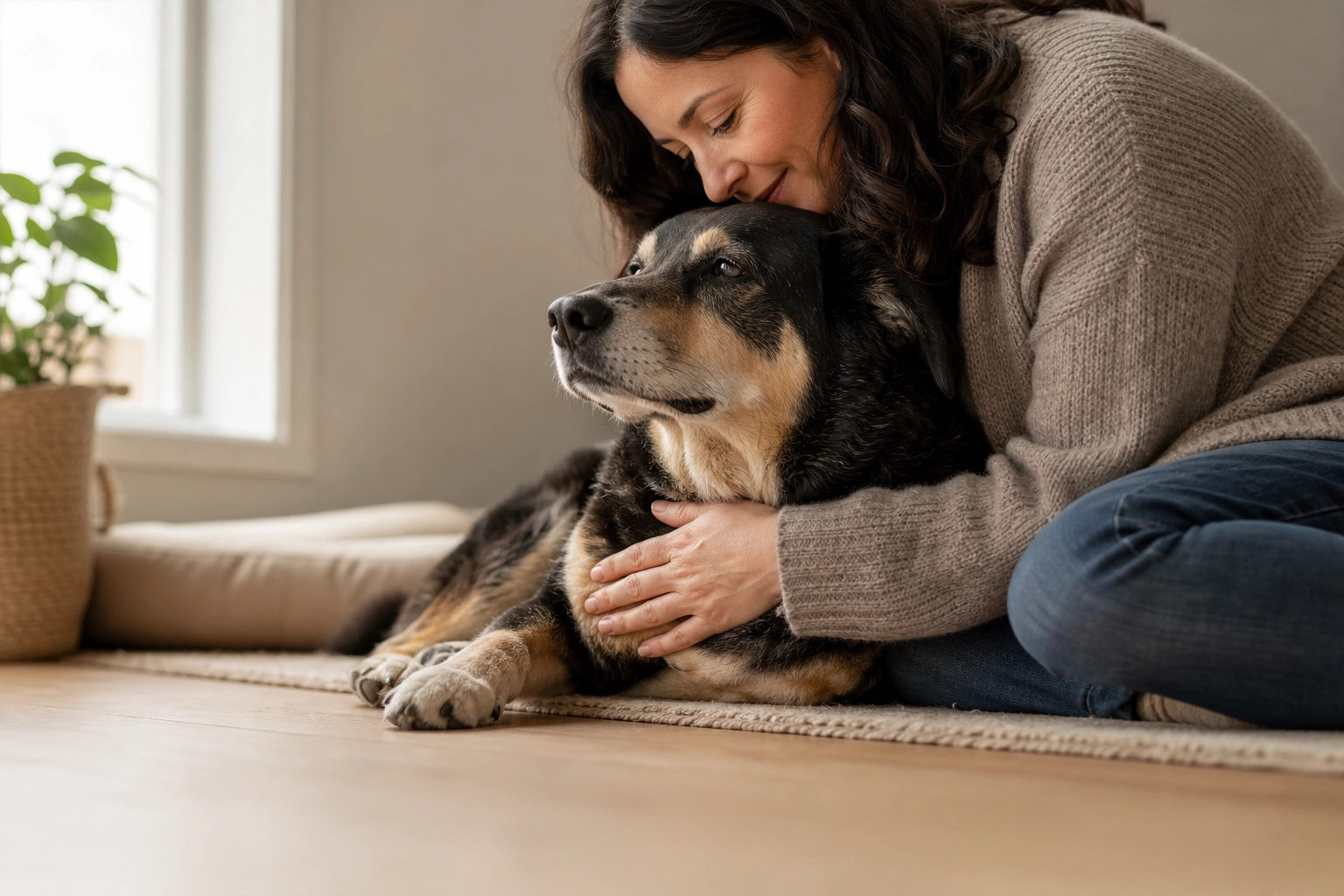
Hearing the word "cancer" about your beloved dog is heart-wrenching, but a diagnosis isn't always the end of the story. Understand the disease, warning signs, diagnosis, and treatment options focused on quality of life.
Hearing the word "cancer" about the apple of your eye is one of the most heart-wrenching things a dog owner can face. Confusion, fear, and worry rush in all at once. I, Dr. Mon and the Geneus Pet team understand, and we're here for you every step of the way.
But take a deep breath and always remember: "a cancer diagnosis isn't always the end of the story." Veterinary innovation has come a long way, with treatment and care options that help your dog maintain a good quality of life and stay with you longer. Today I'll walk you through the key information, drawing on world-class authorities like the FDA, AVMA, and VIN.
According to the American Veterinary Medical Association (AVMA), about 1 in 4 dogs will develop cancer at some point in life, rising to 50% (1 in 2) in dogs aged 10 and older (AVMA — Cancer in Pets). Like us, dogs get neoplasia (tumors) in two forms:
Benign tumors: grow slowly, don't invade surrounding tissue, and don't spread. Usually not life-threatening unless they press on vital structures — e.g. lipomas (fatty tumors).
Malignant tumors (cancer): grow unpredictably, invade rapidly, and metastasize throughout the body, becoming life-threatening — e.g. lymphoma, osteosarcoma (bone cancer).
So what causes cancer? While some breeds carry a hereditary risk that often shows at a young age, most cancers in dogs arise from spontaneous mutations that accumulate naturally through errors in cell division, or are triggered by the environment — chemicals, radiation, or toxins building up over time (VIN — Veterinary Information Network).
Early-stage cancer is often hard to detect because dogs are very good at hiding illness. So check your dog's body every week (feel the chest, abdomen, and armpits, and inspect the mouth). If you notice any of these, see a vet promptly (AVMA):
Remember: these signs also occur with non-cancerous diseases, but all of them warrant a vet's attention to find the cause. Read more on proactive care in preventive medicine.
When cancer is suspected, the first step is confirmation by withdrawing cells to examine under a microscope (cytology) or taking a tissue sample (biopsy) to tell whether it's benign or malignant. The disease is then "staged" using the TNM system to plan treatment (AVMA):
Tools used include radiography (X-ray), ultrasonography, and in some cases CT scan or MRI.
The main goal isn't just to destroy cancer cells — it's to "preserve your dog's best possible quality of life" so they don't suffer. Today's options are varied.
Still the most effective first-line treatment for cancer that's still localized, if the mass can be removed completely and safely.
Uses drugs to control cancer cell division. The good news: most dogs tolerate chemotherapy better than people do, with fewer and milder side effects — much less hair loss or severe nausea than in humans (FDA).
The FDA has now approved several drugs specifically for canine cancer, including an oral at-home lymphoma drug (e.g. Laverdia / verdinexor) that helps inhibit cancer growth and spread more conveniently and precisely (FDA).
Help control disease where surgery isn't possible, or reduce pain.
If you need to give chemotherapy or certain cancer drugs at home, per safe-handling guidance you must wear medical chemotherapy gloves every time and carefully handle your dog's excreta (urine, feces, vomit, saliva) for at least 3 days after dosing. In particular, pregnant women, those planning pregnancy, and children must never contact the drug or these excreta. For safety, always ask your treating vet for the correct handling procedure.
Facing your dog's cancer takes enormous physical and emotional strength — but remember, you're not walking this road alone. Your veterinary team and specialists are always ready to help choose the best path for your dog. Take it one day at a time, and give them the happiest, best moments in every minute. To care for their long-term health proactively, read our guide to chronic illness in senior dogs and Healthspan: 6 ways to extend your dog's life.
Medical disclaimer: This article is general educational information only, not a diagnosis. If you notice abnormal signs or want to plan treatment, please see and consult a qualified veterinarian directly for your dog's utmost safety.
If you're facing this situation, or would like to discuss your dog's genetic disease-risk results further, reach out to me and the Geneus Pet team anytime. We're always here beside you. 🤝
1. Can cancer in dogs be cured?
It depends on the type and stage. Some cancers caught early and still localized can be fully removed by surgery, while others can be managed so the dog lives well alongside them. The main goal is quality of life, not just eliminating the cancer — which is why early detection matters so much.
2. Is giving oral chemotherapy at home dangerous?
It's safe if you follow the guidance. Always wear medical chemotherapy gloves, and carefully handle excreta (urine, feces, vomit, saliva) for at least 3 days after dosing. Pregnant women, those planning pregnancy, and children must never touch it. Ask your vet for the correct procedure.
3. Can cancer in dogs be prevented?
Most cancers have no clear cause, so prevention is difficult. But spaying — especially before the first heat — greatly reduces mammary cancer and eliminates uterine/ovarian cancer risk in females, and neutering eliminates testicular cancer in males. Combine this with regular check-ups for early detection.


