


 Thailand (THB)
 United States (USD)
 Singapore (SGD)
 African Country (USD)
 Canada (USD)
 Egypt (USD)
 European Country (EUR)
 Hong Kong (HKD)
 India (USD)
 Indonesia (IDR)
 Iran (USD)
 Iraq (USD)
 Japan (JPY)
 Myanmar (USD)
 Oman (USD)
 Qatar (USD)
 Saudi Arabia (USD)
 Switzerland (CHF)
 Taiwan (USD)
 Turkey (USD)
 UAE (USD)
 United Kingdom (GBP)
 International (USD)
 Written by
Breed predicts a dog's temperament only about 9% of the time — but "biddability" (trainability) is the standout exception, the behaviour predicted most reliably by breed. Here's the science behind it from the study.
Many people believe some dog breeds are simply born smarter, more obedient, and more eager to follow commands than others. As a veterinarian, I'm often asked: just how accurately does "breed" really predict a dog's behavior and how well-behaved they'll be? Today I, Dr. Mon, want to walk you through the latest genetics research that answers this question in a fascinating way.
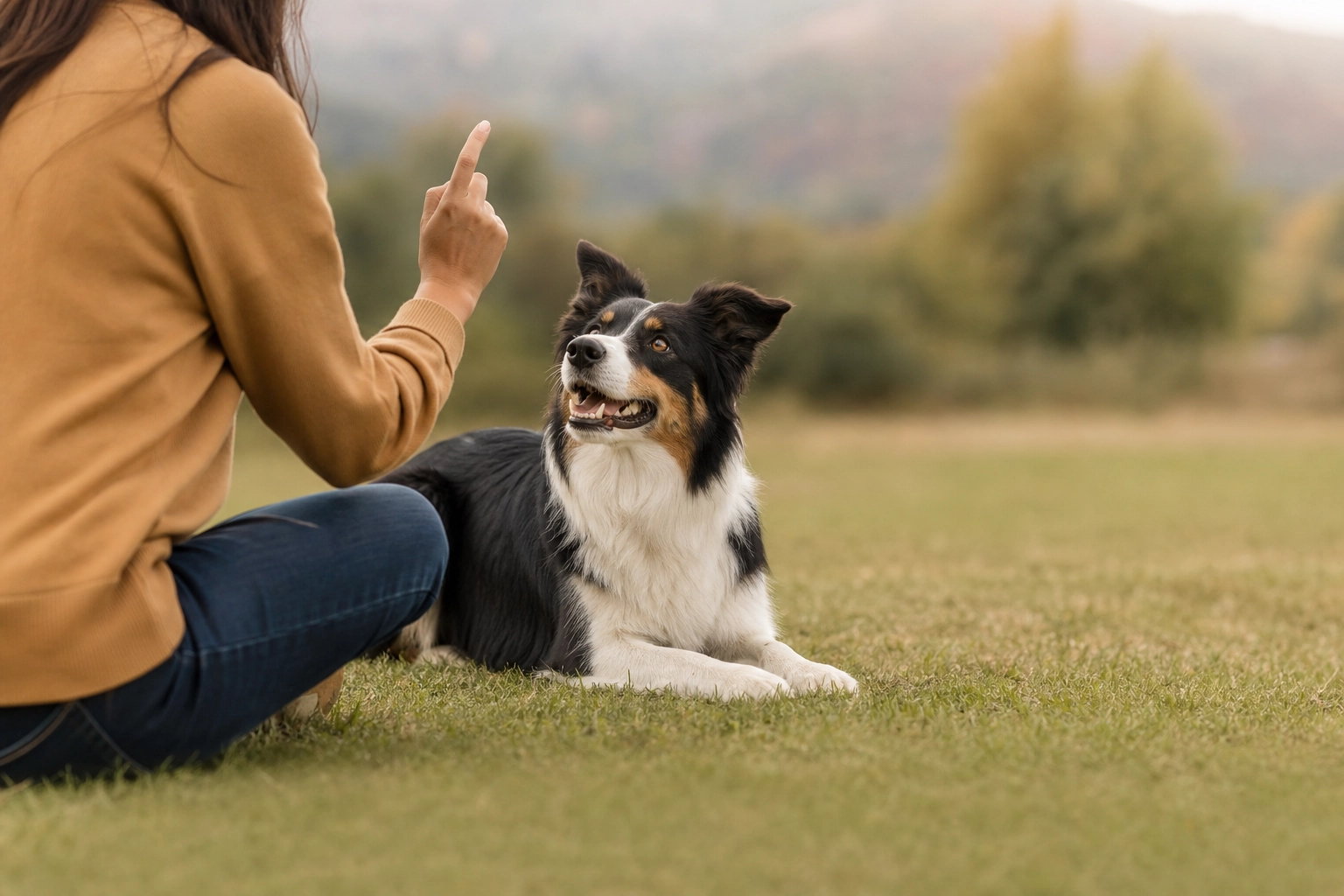
In animal behavior, biddability means "responsiveness to direction and commands" — in everyday language, "willingness to be trained" or "trainability."
Before the 1800s, humans mostly selected and bred dogs for their functional working ability — hunting, guarding, or herding. In the modern era, however, dog breeds were redefined around a physical ideal and bloodline purity, which leads us to assume that a dog of a given breed must always have the temperament of its ancestors. That belief isn't always true.
To test how much genetics and breed actually shape dog behavior, the Darwin's Ark project gathered a huge dataset to study the genetics of complex traits by:
The results were surprising. Researchers found that most dog behaviors are genuinely heritable, with heritability above 25% — yet "breed" accounted for only a small share of behavioral variation, with breed explaining only about 9% of the differences in behavior between individual dogs.
Put simply: there really are "genes" behind behavior, but those genes aren't tied to "breed" the way we tend to assume. To understand genes and temperament more deeply, read genes, mood, and temperament in dogs.
Although breed predicts behavior poorly overall (only about 9%), for the trait of biddability — trainability and obedience to commands — it stands out as an interesting exception. The research shows that for behaviors with high heritability and clear between-breed differences, like biddability, knowing a dog's ancestral breed helps predict likely trainability more accurately than other behaviors.
The team tested mixed-breed dogs to see the genetic effect of breed ancestry and compared it with purebred surveys, finding the following:
DNA results confirmed that dogs with Border Collie ancestry have a genetic effect producing genuinely high, distinct levels of biddability and obedience — consistent with owner surveys.
Conversely, some behaviors — like human sociability in dogs with Labrador Retriever ancestry — showed no significant breed-specific genetic association. And for "tolerance for provocation" (agonistic threshold), breed tells us almost nothing at all.
Through genome-wide association scanning, researchers found 11 genomic locations significantly linked to behavior (such as howling frequency and human sociability). Even so, the study concluded that the behaviors we think of as unique to each modern breed actually arose from shared polygenic adaptation across many genome locations over thousands of years — long before modern dog breeds even existed. What today's purebred dogs were truly separated into is more a matter of appearance and aesthetic traits than temperament.
So if you're about to train your dog — purebred, mixed, working, or ordinary mixed-breed — remember that while biddability is partly genetically determined, the undeniable key ingredient is your environment and correct, consistent training. Every dog has hidden potential, and breed is not what decides the limits of their learning.
Want to start training the right way? Read more techniques in puppy training tips, and for adopted dogs, see our guide to training rescue dogs.
1. Scientifically, does knowing a dog's breed really tell you how easy it will be to train?
It's fairly accurate for some behaviours. The Darwin's Ark study found that overall, breed explains only about 9% of a dog's temperament, but biddability (trainability and responsiveness to commands) is an exception with notably high heritability. Knowing a dog's ancestry — for example, herding lines like Border Collie — helps predict likely trainability better than other behaviours. Ultimately, though, every dog has individual factors and still needs proper, consistent training.
2. Are friendliness and human sociability determined by pure breed from birth?
Not necessarily. The research shows that human sociability and tolerance for provocation are not significantly tied to specific breeds the way we tend to assume. Some Labradors aren't friendly with everyone, and some tough-looking dogs are very sociable, because these traits arise from many genes interacting over a long time. Friendliness depends mainly on experience, upbringing, and early-life socialization.
3. When owners call a dog "stubborn," is it really a lack of biddability?
Stubbornness doesn't mean a dog is incapable of understanding commands. It often stems from factors owners overlook — an environment with too many distractions that break focus, insufficient motivation or rewards that aren't enticing enough, or confusion about the command itself. So a dog with lower breed-linked biddability, such as independent hunting breeds, may simply need consistent training, appropriate motivation, and more patience — not because they can't learn.


