


 Thailand (THB)
 United States (USD)
 Singapore (SGD)
 African Country (USD)
 Australia (AUD)
 Canada (USD)
 Egypt (USD)
 European Country (EUR)
 Hong Kong (HKD)
 India (USD)
 Indonesia (IDR)
 Iran (USD)
 Iraq (USD)
 Japan (JPY)
 Myanmar (USD)
 Oman (USD)
 Qatar (USD)
 Saudi Arabia (USD)
 Switzerland (CHF)
 Taiwan (USD)
 Turkey (USD)
 UAE (USD)
 United Kingdom (GBP)
 Written by
Want to bring your dog along on your holiday smoothly and safely? A vet's checklist, from assessing readiness and preparing their health to in-car safety, cross-border paperwork, packing, and accommodation etiquette.
When a long holiday rolls around, leaving your little heart-healer at home is tough, isn't it? "Pet-friendly travel," bringing your dog along on the trip, has become hugely popular among pet parents these days. But I want to be candid: taking your dog away isn't just "load them in the car and go." There are real health and safety matters to plan for in advance. So today I've put together a vet's checklist, drawing on animal-welfare organizations and international travel authorities, for you.
Before you excitedly book a stay, I'd like everyone to pause and think. Because while we enjoy a change of scenery, some dogs don't feel the same way. Many dogs find changes to their routine, environment, and long journeys stressful. Canine Partners recommends weighing these factors before deciding (Canine Partners).
I'll say it plainly: for dogs that rely heavily on routine, staying home with someone they trust may be a better "gift" than being taken on holiday. Don't feel guilty if you choose that path.
Once you've decided to bring them, the key step is health preparation. The RSPCA recommends seeing your vet at least 1 month before travel to confirm your dog is fit enough, and to make sure vaccinations, flea/tick, and worming treatments are up to date (RSPCA).
Regular preventive health checks are the foundation. Read more in preventive medicine for dogs.
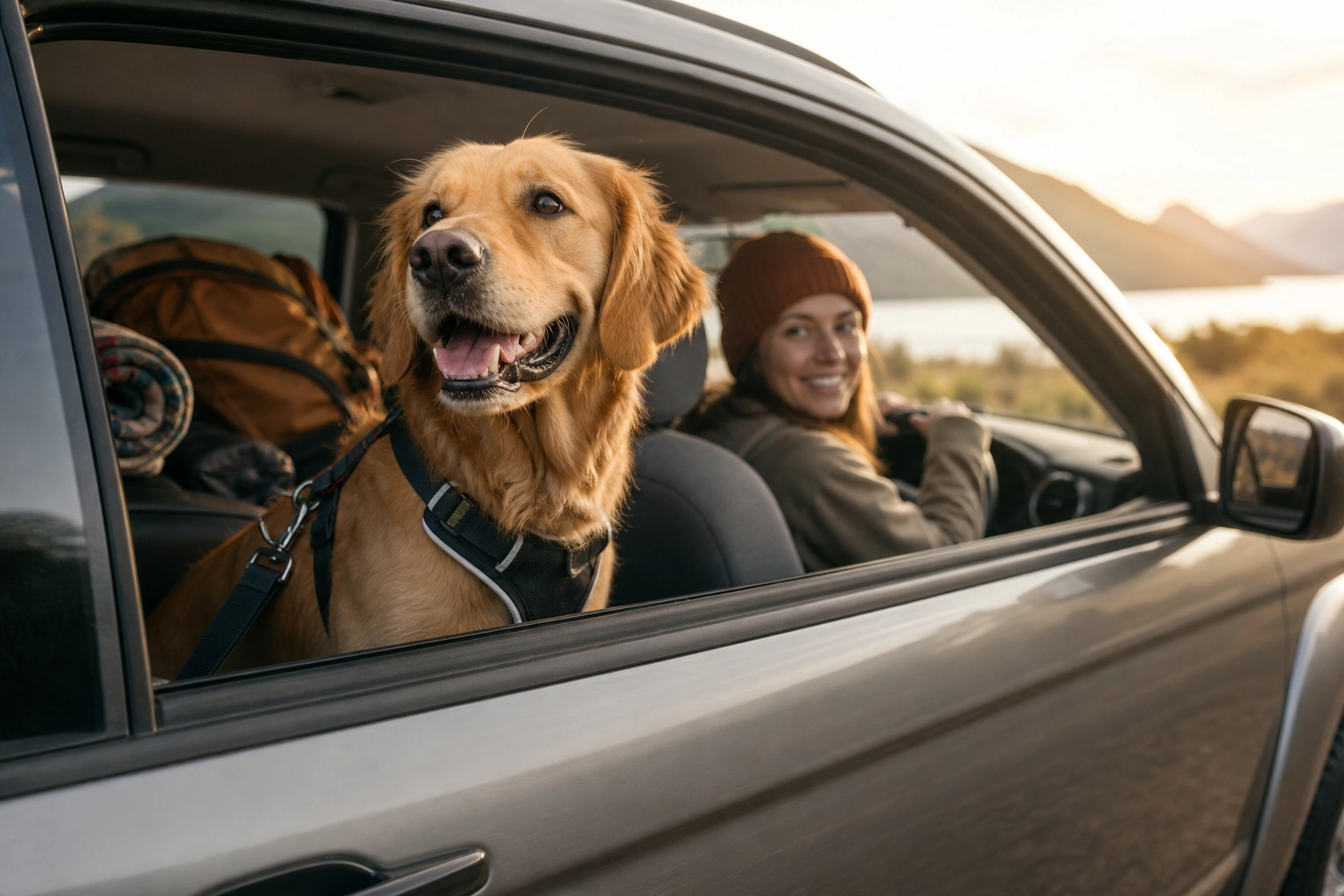
Whichever way you travel, safety always comes first — especially by car, the most common mode.
⚠️ A rule you must never break: never leave your dog alone in a car parked in the sun, even with the windows cracked. The temperature inside can soar and cause fatal heatstroke within minutes. The RSPCA warns this is a preventable cause of death that recurs every year. Read more in heat stroke in dogs.
For flat-faced breeds (Pugs, Bulldogs, Shih Tzus), take extra care with heat and breathing during the journey. Read more in Brachycephalic Syndrome.
I want us to be clear: ordinary dogs (those that aren't registered assistance dogs) must travel in the cargo hold, not the cabin. Both the RSPCA and Canine Partners agree this is a very stressful experience for dogs. If you can avoid it, choose destinations reachable by car, ferry, or train, and always contact the airline about their pet-travel policy in advance.
If you plan to fly your dog abroad, the paperwork gets far more complex. Every country has different rules, so I recommend starting at least 1–3 months in advance.
For entry into the United States: the CDC is the primary authority regulating dog imports. Dogs vaccinated in the U.S. that have travelled to a high-risk rabies country within the past 6 months must have a "Certification of U.S.-Issued Rabies Vaccination" form, which must be submitted by a USDA-accredited veterinarian before the dog leaves (USDA APHIS). Because these rules change often, always check the latest information from official sources before you travel.
To make the trip as smooth as bringing home along, don't forget to pack your dog's bag using this checklist.
| Item | Why You Need It |
|---|---|
| Their usual food + water | Bring enough, plus 2–3 spare days. Never switch brands suddenly, as it causes stomach upset |
| Collapsible food/water bowl | So they can eat and drink easily on the road |
| Regular meds + first aid | For emergencies, such as wound ointment |
| Harness, lead, ID tag | The ID tag should have a working contact number and your holiday address |
| Bed/blanket/familiar toys | Helps your dog feel safe in a new place (all three organizations stress this) |
| Poo bags + towels | Good public manners (towels are essential for beach trips) |
| Vaccination/health documents | In case the accommodation or border asks to see them |
Taking your dog on holiday is about creating special memories together. But the most important thing isn't ticking off every check-in spot — it's "your dog's comfort and safety." If we plan carefully, mind the small details, and are honest with ourselves about whether our dog is truly ready, that trip will surely become a happy memory for both of you.
Medical disclaimer: This article is general guidance. Every dog's readiness differs; consult a veterinarian before planning travel, especially for senior dogs, those with existing conditions, or flat-faced breeds, and always check the latest pet-import rules from the official authorities of your destination country.
Want to get your dog's health ready before you travel? Reach out to me and the Geneus Pet team anytime.
1. How do I know if my dog is suited to travelling on holiday?
Not always. It depends on your dog's age, health, and temperament. Many dogs find changes to routine, environment, and long journeys stressful, especially senior dogs, puppies with incomplete vaccinations, or highly anxious dogs that fear strangers. For these dogs, staying home with someone they trust may be the better choice.
2. How far ahead should I take my dog to the vet before travelling?
Start at least 1 month before travel, to take your dog for a health check and confirm vaccinations, flea/tick, and worming treatments are up to date. If travelling abroad, start 1-3 months ahead, because documents like a microchip, rabies vaccine, and health certificate take time to prepare.
3. What safety measures do I need when travelling by car?
Always secure your dog with a fixed crate or a dog seatbelt harness, never letting them roam free in the car or sit on the driver's lap. Feed them no sooner than 2 hours before departure to reduce carsickness, break every 2-3 hours so they can stretch and toilet, and most importantly, never leave your dog alone in a car parked in the sun, as it risks fatal heatstroke.
4. How can I help my dog settle into a new place faster?
The most helpful technique is keeping their routine as intact as possible, with similar meal, walk, and sleep times. Feeding their usual food matters too, because a sudden diet change can cause stomach upset. Bringing familiar-smelling items, such as their bed or favourite toy, also helps your dog feel secure in a new place more quickly.


