


 Thailand (THB)
 United States (USD)
 Singapore (SGD)
 African Country (USD)
 Australia (AUD)
 Canada (USD)
 Egypt (USD)
 European Country (EUR)
 Hong Kong (HKD)
 India (USD)
 Iran (USD)
 Iraq (USD)
 Japan (JPY)
 Myanmar (USD)
 Oman (USD)
 Qatar (USD)
 Saudi Arabia (USD)
 Switzerland (CHF)
 Taiwan (USD)
 Turkey (USD)
 UAE (USD)
 United Kingdom (GBP)
 International (USD)
 Written by
Running with your dog, safely: understand the canine Runner's High, when to start, which breeds and ages are suited, how to build fitness gradually, and hot-weather tips to avoid heat stroke.
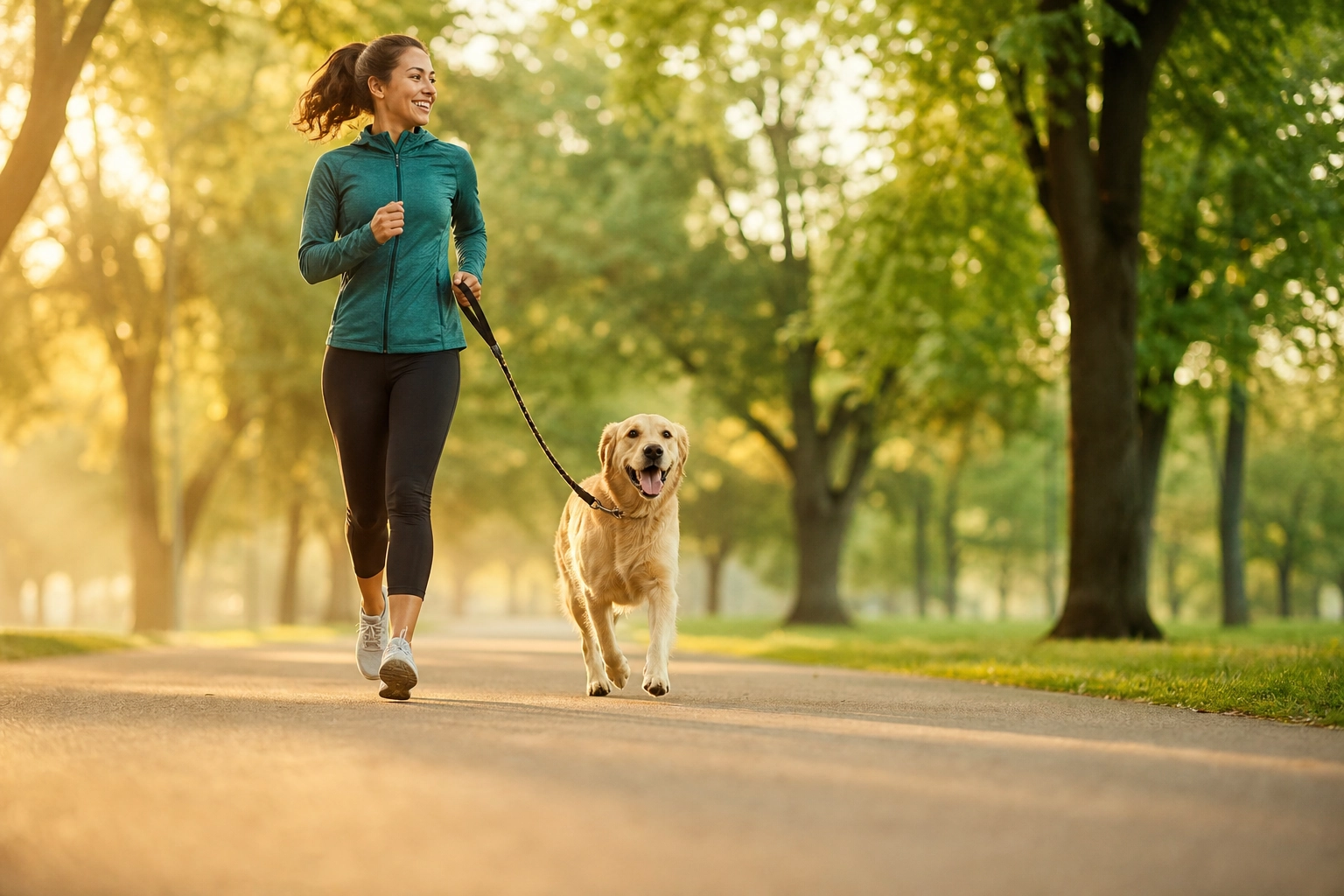
For a runner who has a four-legged best friend, few things feel better than heading out for an easy morning run together. I truly believe running is one of the best ways to build both a strong bond and good health for you and your dog. But before you lace up and hit the pavement, there are a few safety points I would love you to check off first, so that every stride your dog takes is genuinely safe and happy.
Many people assume running only benefits us humans, but in reality your dog gains just as much, physically and mentally. Beyond keeping them fit and trim, a 2012 study in the Journal of Experimental Biology reported that dogs can experience a "Runner's High", that deeply satisfying, blissful feeling after a long run, just as humans do. It is a wonderful way to relieve built-up stress.
If you would like a fuller picture of exercise for dogs, I recommend reading our guide to physical exercise for dogs alongside this article.
The most important step before your first stride is to always consult your own veterinarian first. Even if you are an avid runner, it does not mean your dog is ready to run immediately. Your vet can assess your dog's physical readiness and help you plan for hydration and rest breaks that suit your dog.
Never start a dog running too early, especially puppies whose bones and joints are still growing. High-impact exercise, such as continuously forcing a dog to run long distances on a leash, is highly unsuitable at this age. Because each breed reaches physical maturity on a different timeline, talking with your vet to map out an age-appropriate exercise timeline is by far the safest approach.
For puppies, senior dogs, or those with joint limitations, low-impact exercise is a gentler option that helps build fitness before moving on to running.
It is not only us who need to stretch. Dogs need a warm-up before running too. At the start, walk slowly and let your dog set the speed and distance they can manage, then gradually add speed and distance a little at a time.
Moving to natural trails has several advantages. It helps relieve stress and makes the run more fun, and importantly, soil or grass absorbs impact far better than hard surfaces. If you run through woods or tall grass, remember to give tick and flea prevention beforehand, and if your dog tolerates them, protective booties help guard the paws against twigs and stones.
Hot, humid weather here is genuinely dangerous. If you must run, pick a cool time of day such as early morning or evening, and take more frequent breaks for both of you. Carry enough water for two, along with a collapsible bowl so your dog can drink easily at rest stops.
Heat stroke warning signs: Running in strong sun risks heat stroke, which can push body temperature above 41°C (about 106°F) or higher. If your dog shows severe panting, unusually heavy drooling, or a racing heartbeat, stop running and start cooling them down immediately.
One thing you cannot overlook: hot asphalt can burn a dog's paw pads and cause blisters, even if it feels only mildly warm to your hand. Knowing the signs and basic first aid is essential. Read more in our article on heat stroke in dogs.
1. Can dogs really feel a Runner's High, and when should I start running with my dog?
Yes. Research confirms dogs can experience that blissful, satisfied feeling after a long run just like humans, which strengthens the body and relieves stress beautifully. However, never force a puppy to run long distances, because their bones and joints are still developing. Owners should consult a veterinarian to assess readiness and map out a timeline based on age and breed before starting.
2. What kind of weather should I be careful of, and how do I spot heat stroke in my dog while running?
Avoid strong sun and hot, muggy conditions by switching to early morning or evening runs. If you push through hot sun, your dog's body temperature can climb above 41°C and trigger heat stroke. Watch for severe panting, unusually heavy drooling, or a racing heartbeat, and if you see these signs, stop running and start cooling your dog immediately.
3. What kind of route protects the paws, and which gear should a runner carry?
Choose natural trails, because soil or grass absorbs impact far better than asphalt or concrete, which stores heat and can blister the paw pads. Essential gear includes a harness to reduce pressure on the windpipe, a hands-free running leash to keep your hands free, a collapsible water bowl, and protective booties to guard against twigs and stones on woodland runs.
4. Why is a warm-up important, and what kind of leash should I use?
Dogs need a warm-up just like people. At the start, walk slowly and then gradually add speed and distance a little at a time. Keep your dog on a leash at all times so you can control them if something triggers them, and use a harness rather than a regular collar to reduce pressure on the windpipe when your dog gets tired.


