


 Thailand (THB)
 United States (USD)
 Singapore (SGD)
 African Country (USD)
 Australia (AUD)
 Canada (USD)
 Egypt (USD)
 Hong Kong (HKD)
 India (USD)
 Indonesia (IDR)
 Iran (USD)
 Iraq (USD)
 Japan (JPY)
 Myanmar (USD)
 Oman (USD)
 Qatar (USD)
 Saudi Arabia (USD)
 Switzerland (CHF)
 Taiwan (USD)
 Turkey (USD)
 UAE (USD)
 United Kingdom (GBP)
 International (USD)
 Written by
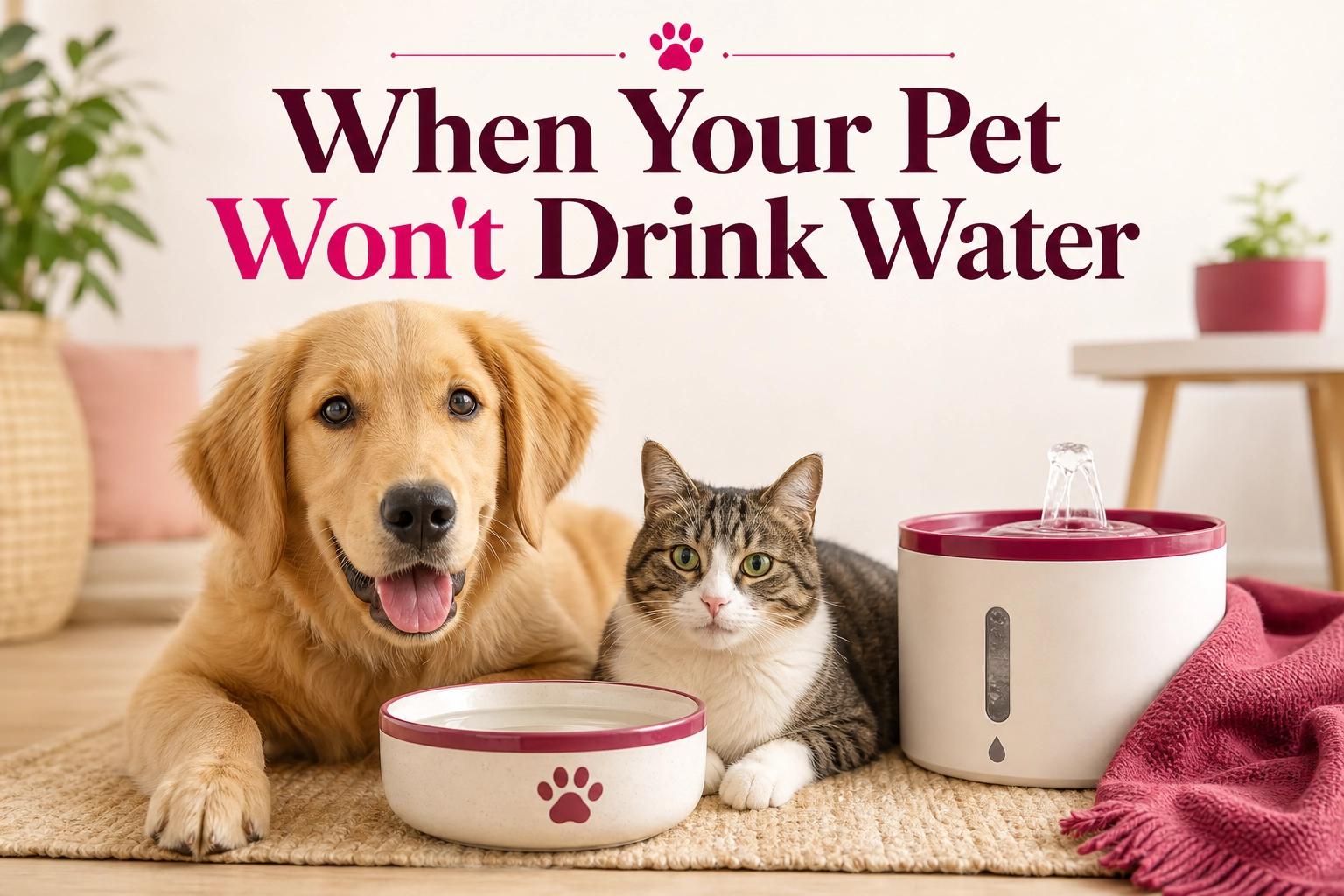
Low water intake is no small matter, especially for cats and flat-faced dogs. A vet explains how much water pets need daily, simple at-home dehydration checks, the link to heat stroke, and practical tips to get your pet drinking more.
Low water intake is no small matter — particularly for cats and certain dog breeds — because water is essential for metabolism, kidney function, and, most importantly, body-temperature regulation. As a veterinarian, I'd like to lay out a simple, practical guide to keeping your pet well hydrated.
In general, dogs and cats should get roughly 60–70 ml of water per kg of body weight per day to maintain fluid balance and support the kidneys.
In Thailand's climate, heat stroke is one of the top dangers. Sufficient water helps pets cool down through panting and the sweat glands in their paw pads. The highest-risk group is flat-faced (brachycephalic) breeds such as Bulldogs, Pugs, French Bulldogs, and Persian cats, whose airways dissipate heat less efficiently.
You can do two quick at-home checks for dehydration:
Some breeds were developed for work in water and are therefore more comfortable with and fond of it — for example Labradors and Golden Retrievers, the Newfoundland (with webbed feet and a water-resistant coat), the Standard Poodle (originally a water retriever), and the Portuguese Water Dog. Although they love water, these breeds often drink fast, so watch for bloat, and always dry their coat thoroughly after swimming to prevent skin disease and fungal infection.
Fresh water, changed daily, is one of the cheapest yet most important "medicines" you can give your pet. If you've tried these tips and your pet still drinks less and less — or far more than usual — don't ignore it, as it can be an early sign of a hidden illness. An early veterinary check-up is always the safest path.
1. Why does bowl cleanliness affect drinking?
Pets have a very keen sense of smell. If the bowl has a slimy biofilm or the water isn't fresh, they'll refuse to drink. Washing the bowl with mild soap and refreshing the water daily is the simplest way to keep them drinking.
2. Is it abnormal for a dog or cat to drink too much water?
Yes. If your pet suddenly drinks noticeably more than usual (polydipsia), it can signal diabetes, kidney disease, or a hormonal disorder. Have a vet run blood work to find the cause.
3. Are there dog breeds that especially love water?
Yes. Breeds developed for water work — Labradors, Golden Retrievers, Newfoundlands, Standard Poodles, and Portuguese Water Dogs — tend to love water. Just dry their coat thoroughly after swimming to prevent skin issues.


