


 Thailand (THB)
 United States (USD)
 Singapore (SGD)
 Australia (AUD)
 Canada (USD)
 Egypt (USD)
 European Country (EUR)
 Hong Kong (HKD)
 India (USD)
 Indonesia (IDR)
 Iran (USD)
 Iraq (USD)
 Japan (JPY)
 Myanmar (USD)
 Oman (USD)
 Philippines (USD)
 Qatar (USD)
 Saudi Arabia (USD)
 Switzerland (CHF)
 Taiwan (USD)
 Turkey (USD)
 UAE (USD)
 United Kingdom (GBP)
 International (USD)
 Written by
Pet DNA testing reveals breed and inherited disease risks — such as HCM heart disease in cats, hip dysplasia, and the MDR1 drug-sensitivity gene in dogs — helping you plan preventive care precisely.
Hi, I'm Dr. Monticha. As a veterinarian, I believe every pet lover wants their dog or cat to stay with us for many healthy years. Today, technology lets us care for them more deeply than before — through pet DNA testing, which reveals a pet's health tendencies early. In this article I'll explain what DNA testing can tell us, how it helps, and what to keep in mind.
A dog's or cat's DNA test can reveal several things. First, breed and ancestry, which helps you understand your pet's temperament and specific needs. Second, risk of inherited diseases common in certain breeds. And third, specific traits such as coat color or how they respond to certain medications.
This information isn't just for curiosity — it helps owners and veterinarians plan preventive care more precisely, especially for purebred pets with breed-specific risks.
In dogs, common inherited conditions include hip dysplasia in large breeds, heart muscle disease, and importantly the MDR1 gene mutation in herding breeds (such as Collies), which causes severe sensitivity to certain drugs. Knowing this in advance helps veterinarians choose medications far more safely.
In cats, conditions include Hypertrophic Cardiomyopathy (HCM), seen in breeds like Maine Coon and Ragdoll, and Polycystic Kidney Disease (PKD), seen in Persians. DNA testing can indicate whether a pet is a carrier or has a tendency toward these conditions.
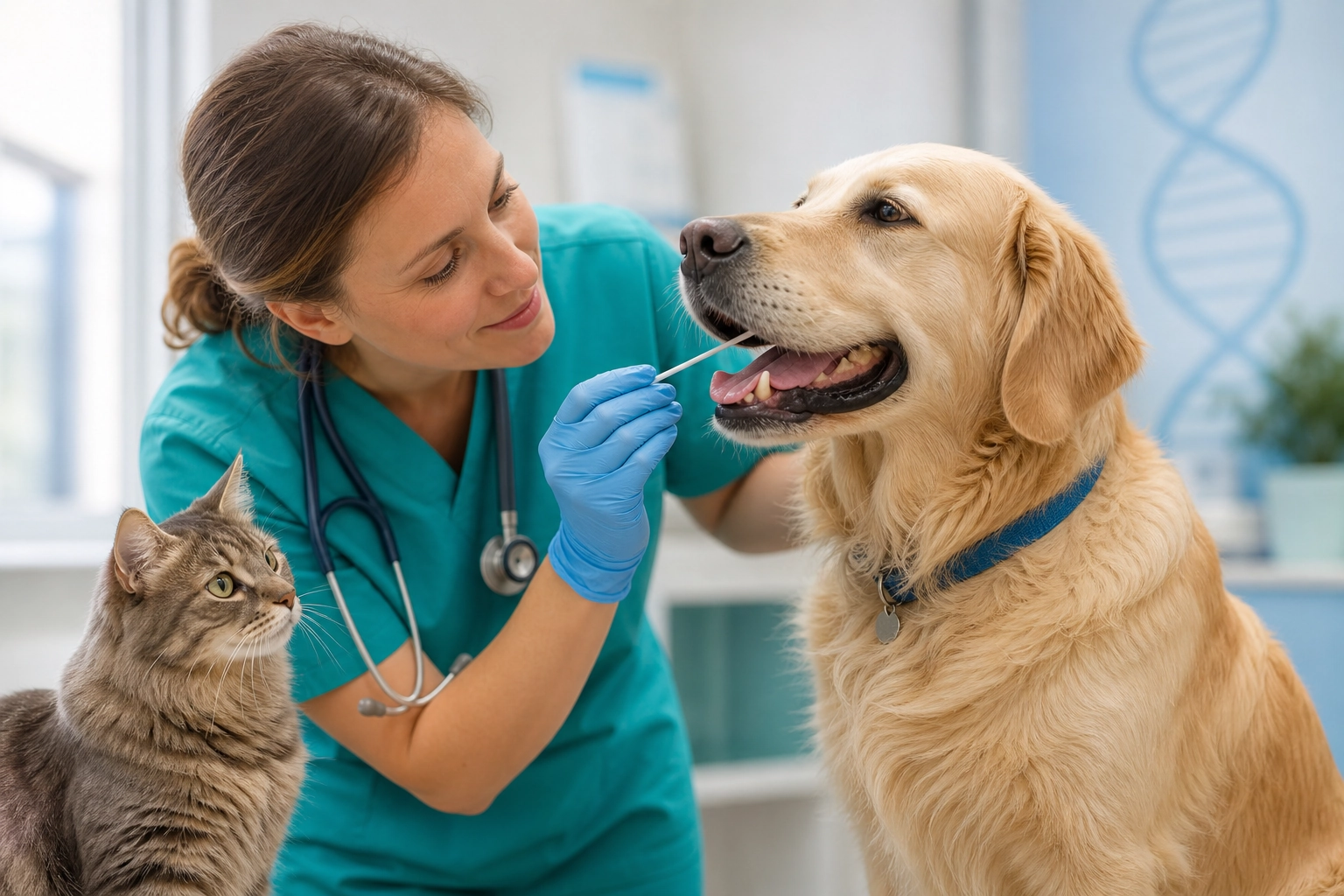
The real benefit of DNA testing with Geneus Pet is that it helps us care for pets precisely and in time. For example, if we know a pet leans toward heart disease, a vet may recommend more regular heart checks; if there's an MDR1 mutation, dangerous drugs can be avoided; and if there's a tendency toward hip issues, weight and exercise can be managed appropriately from a young age.
For responsible breeders, genetic information also helps with breeding planning to reduce passing inherited diseases to the next generation. Knowing in advance is a wonderful gift for a pet's long-term health.
I'd like every owner to understand that DNA testing tells a "tendency," not a diagnosis. Many pets with genetic risk never show symptoms, and pets with no detected risk can still fall ill from other factors such as diet, age and environment. Results are supporting information, not a verdict.
Most importantly, take results to your veterinarian to interpret and plan care together. Regular check-ups, suitable nutrition, and love and attention remain the heart of keeping your pet happy and long-lived.
1. Is collecting a pet's DNA sample painful?
No. Most tests use a simple cheek swab to collect cells, which is easy and painless for your pet, suitable for both dogs and cats.
2. Why is the MDR1 gene important in dogs?
The MDR1 gene mutation is common in herding breeds such as Collies and causes severe sensitivity to certain drugs. Knowing in advance helps veterinarians choose medications safely, making it very useful information.
3. Can DNA testing tell me for sure my pet will get sick?
No. DNA testing indicates a risk tendency, not a diagnosis that your pet will definitely fall ill. Many pets with risk never show symptoms. Take results to your veterinarian to plan care together.
4. When should I test my pet's DNA?
You can test from a young age, because knowing tendencies early allows earlier preventive care — such as weight control, safe medication choices, or targeted health checks. Testing in adulthood is fine too. Consult your veterinarian to pick the right time.


